
Oil & Gas Procurement
Turn requirements into comparable offers.
Read moreRead less about this category
Connect the technical requirement to the purchase
Oil and gas procurement connects an equipment or service requirement to a clearly defined commercial commitment. The work includes preparing an enquiry, identifying appropriate suppliers, comparing offers and coordinating the information needed for delivery. This category reflects the sourcing and procurement subjects already described on the Oillinko website. It is intended for buyers assembling a first request, engineers supporting technical evaluation and traders coordinating several product families. The objective is a purchase description that both sides understand, with assumptions and unresolved questions recorded rather than hidden behind a short product name.
A procurement process can start from an approved datasheet, an equipment list, a replacement part number or an initial project concept. Each starting point has different information gaps. A complete manufacturer code may still need confirmation of revision or availability, while a new process duty may need technical selection before a firm price is meaningful. Identify the maturity of the requirement and the purpose of the enquiry. A budget estimate, a technically evaluated offer and an order-ready quotation should not be treated as interchangeable stages of the same commercial decision.
Structure the request around the buying question
The supplier selection and RFQ category explains how to identify supplier fit and prepare comparable requests. Start with the item or service boundary, required quantity, relevant specification and any constraints on alternatives. An enquiry for an exact spare should distinguish mandatory identity from a preference for an equivalent. For a mixed equipment list, separate the product families and identify which documents apply to each line. This makes it easier for a supplier to answer the relevant questions without assuming responsibility for unrelated parts of the project.
The article on writing a bill of quantities provides a practical introduction to that structure. A useful line item identifies the product, quantity, unit and technical basis, while supporting drawings and datasheets carry the details that do not fit neatly in a schedule. Maintain revision control across these documents. When a clarification changes a requirement, make sure the updated information reaches every supplier participating in the comparison. Otherwise the apparent difference in price may simply reflect different versions of the requested scope.
Evaluate suppliers against the actual scope
Supplier suitability depends on the required product, configuration, project conditions and delivery expectations. A company that offers a broad catalogue may not manufacture the item, hold it in stock or have authority to propose every listed brand. Ask for the relevant evidence and distinguish the manufacturer's role from that of a distributor or sourcing intermediary. The article comparing trading companies and direct manufacturer purchasing explains why either route can be useful depending on the requirement. The decision should follow the scope rather than an assumption that one route always provides the better outcome.
Oillinko's global company directory is an independent reference organized by company role and specialty. A directory entry does not establish a supplier agreement, current stock or an authorized commercial relationship with Oillinko. Use it to understand the industry and identify relevant areas for enquiry, then verify the specific supplier and offered product. This is particularly important when a quotation names a manufacturer but the commercial counterparty is another business. The order should make clear who supplies the goods, who supports the warranty and where the supporting product evidence comes from.
Compare complete offers and recorded deviations
Separate the technical comparison from the commercial comparison while keeping them connected. First establish whether the offered product or service meets the agreed requirement and identify exceptions requiring approval. Then compare price, delivery, documentation, packing, warranty and any excluded scope. A lower unit price may exclude testing or accessories included elsewhere. Request a written deviations schedule rather than trying to infer differences from scattered comments. The final purchase description should incorporate the accepted technical clarification, not simply refer to the earliest enquiry number.
Quality evidence is part of that comparison, but its detail belongs in a clear acceptance specification. Use the inspection and material quality guide to define inspection scope, material records and traceability. Requiring a certificate without naming its purpose can add paperwork without answering the project's acceptance question. Conversely, requesting essential evidence after manufacture may create delays or reveal that the necessary activity was never planned. Agree the required deliverables before placement and identify review or witness points that could affect the production schedule.
Plan delivery as part of the purchase
Delivery terms should identify the agreed place and the allocation of responsibilities, not merely a three-letter abbreviation. The ICC Incoterms resource explains the rules used to allocate relevant costs, risks and obligations in a sale of goods. Payment terms, product acceptance and other contractual matters still need their own agreement. The logistics and delivery guide develops the practical questions about equipment readiness, packing, multi-vendor consolidation and handover records that should be addressed before goods are released.
Ask what triggers the quoted lead time and distinguish manufacturing completion from arrival at the project destination. Drawing approval, advance payment, inspection release and shipping arrangements can each affect the schedule. Record any dependencies and the process for reporting changes. For long or complex orders, request progress information tied to meaningful milestones rather than a repeated promise that the goods are on schedule. The article on consolidated shipments explains why coordinating several ready dates can be as important as selecting the transport mode.
Submit a requirement with clear next steps
The Oillinko procurement services page describes the route for discussing sourcing, RFQ coordination and related purchase requirements. Send the current specification, quantities, destination and required date, and mark any questions that still need resolution. Enquiries are received by Oillinko for review and coordination; an enquiry does not establish stock availability or create a supplier commitment. A useful next step is the clarification or quotation needed to advance the specific requirement. Keeping that step explicit helps the buyer, technical reviewer and commercial counterpart work from the same expectations.
Explore oil & gas procurement topics
Supplier Selection & RFQs
Prepare equipment RFQs, evaluate supplier fit and compare quotations with a clear scope, exceptions and commercial responsibilities.
6 articles · Explore guide →
Logistics & Delivery
Plan multi-vendor shipments, packing, delivery terms and handover records around actual equipment readiness and project deadlines.
4 articles · Explore guide →
Articles in Oil & Gas Procurement
· 9 min read
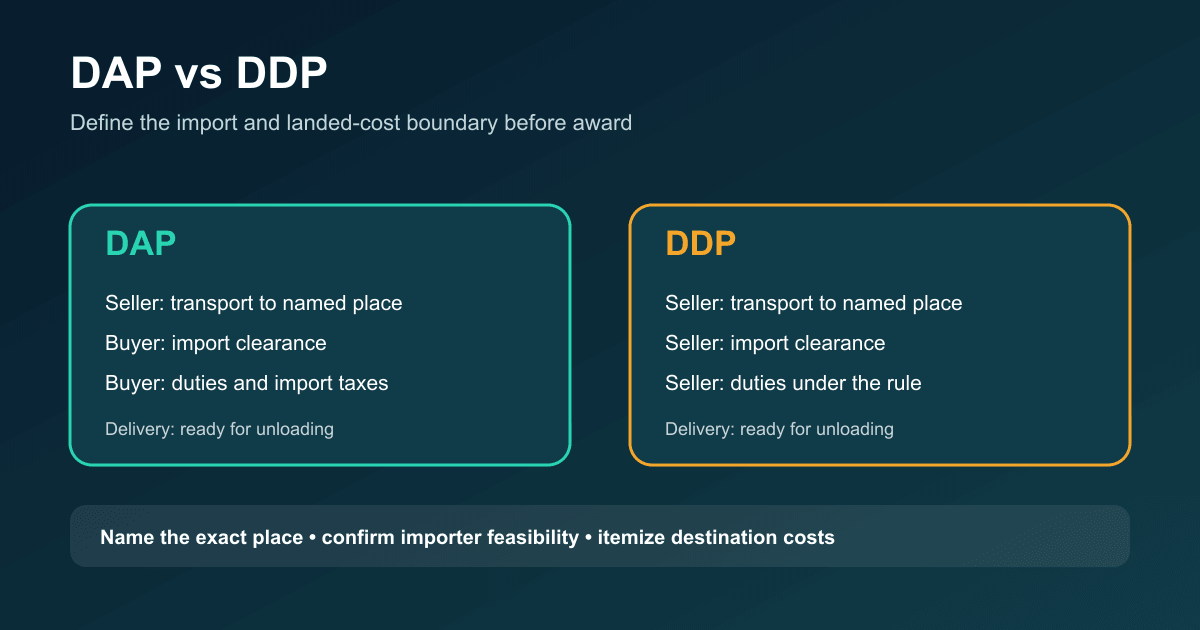
DAP vs DDP for Oil & Gas Equipment Buyers
Compare import clearance, duties, destination delivery and quotation assumptions before selecting a delivered trade term.
Read article →
· 9 min read
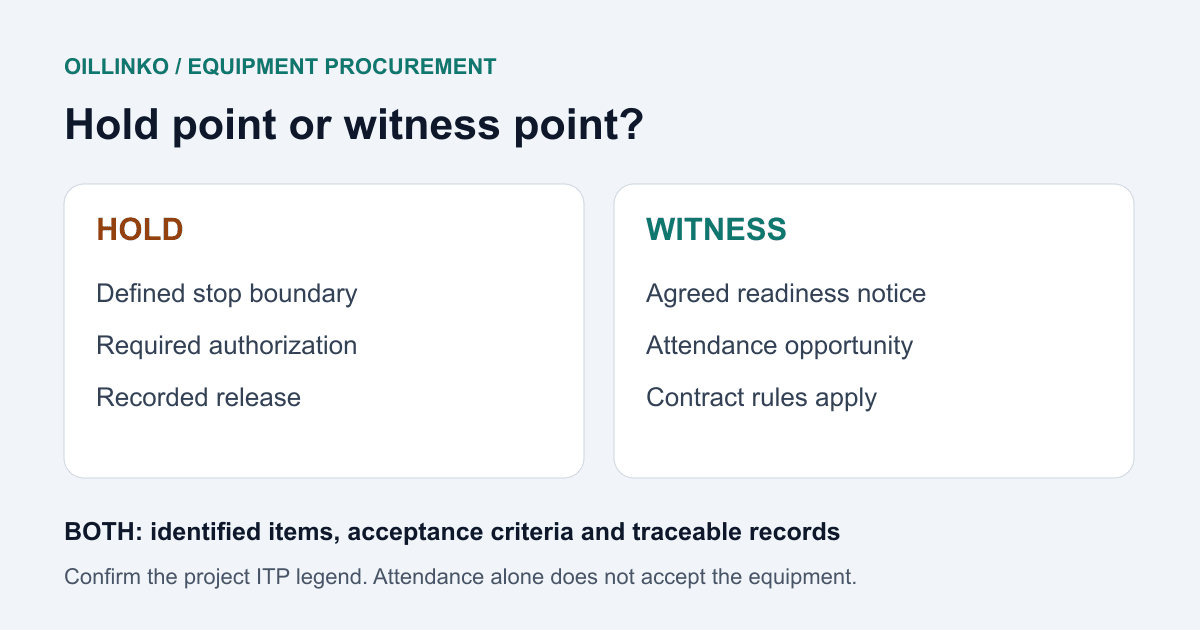
Inspection and Test Plans: Hold vs Witness Points
Agree inspection participation, notification and release authority before placing an equipment order.
Read article →
· 9 min read
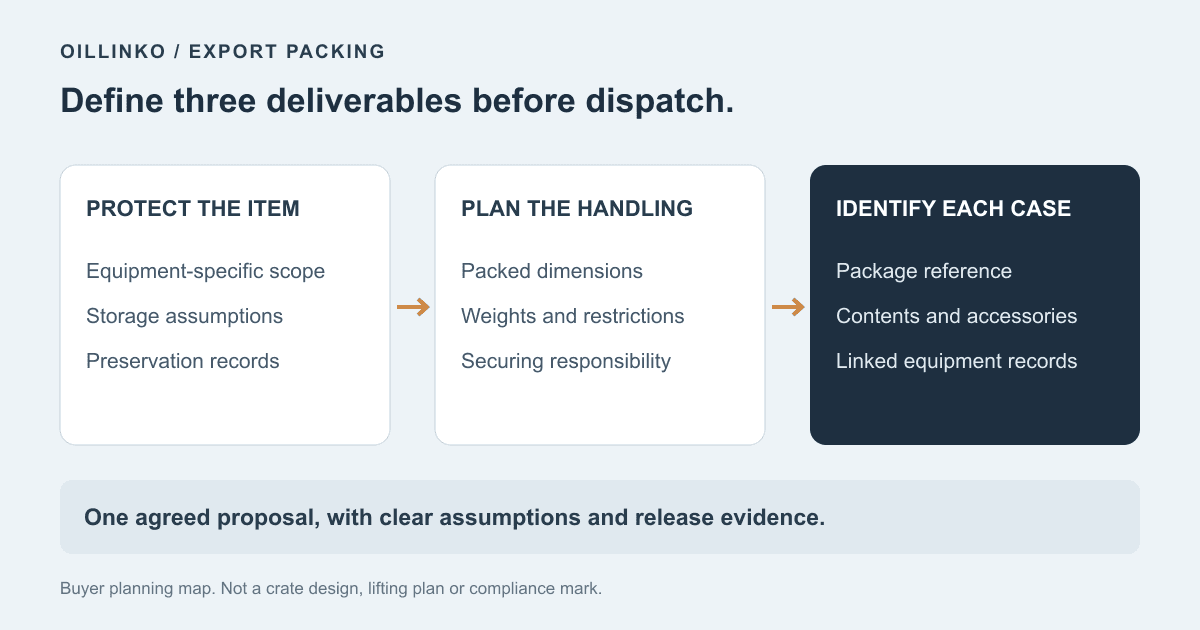
Export Packing for Oil & Gas Equipment: RFQ Checklist
Define equipment protection, package identity and transport responsibilities before comparing packing quotations.
Read article →
· 8 min read
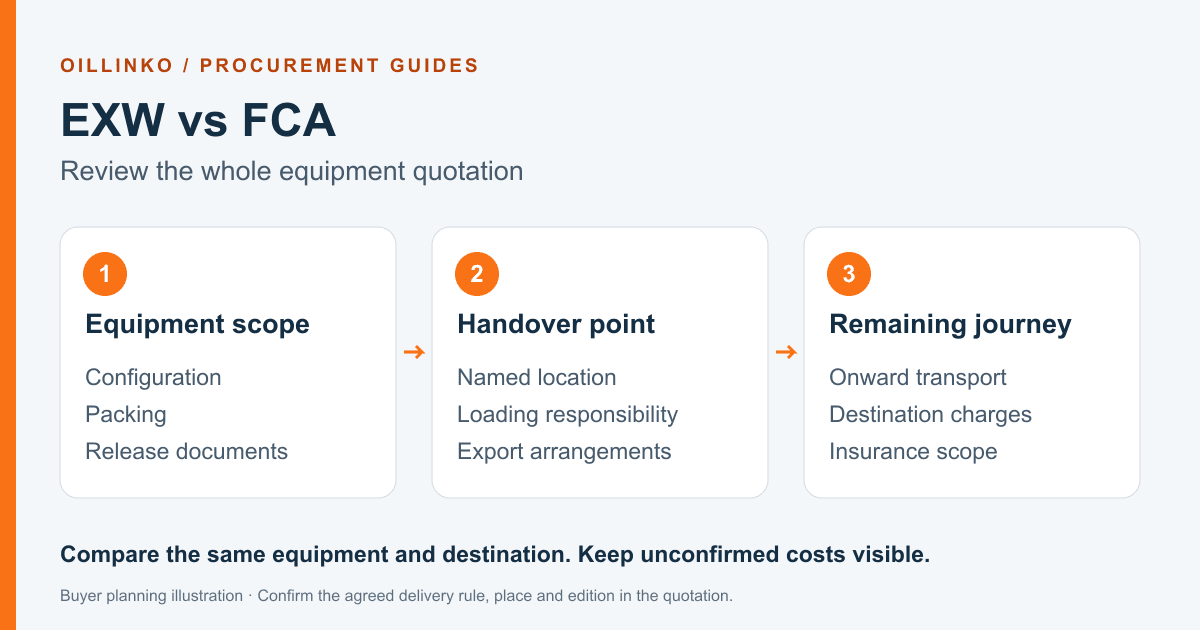
EXW vs FCA for Oil & Gas Equipment Buyers
Compare collection, loading and export responsibilities before choosing an equipment quotation.
Read article →

· 8 min read
Common Reasons an RFQ Goes to the Wrong Supplier — and How a Sourcing Partner Filters for Fit
Why RFQs land on mismatched suppliers, and how to filter for real fit before sending one
Read article →

· 8 min read
Consolidated Shipments and Multi-Vendor Orders: Why Buyers Use a Single Sourcing Partner
How combining multiple vendors into one shipment actually works, and when it's worth it
Read article →
· 8 min read
How to Evaluate and Vet an Equipment Trading Company Before You Send Your First RFQ
The checks that separate a real sourcing partner from a reseller with a PDF catalogue
Read article →
· 8 min read
Equipment Trading Companies vs Buying Direct from the Manufacturer: Pros, Cons and When Each Makes Sense
The trade-offs between routing an order through a trading company and buying direct from the factory
Read article →

· 8 min read
What an Oil & Gas Equipment Sourcing Partner Actually Does (Beyond Placing the Order)
Vendor vetting, comparable quotes, technical review, inspection coordination and freight — the work behind the RFQ
Read article →
· 6 min read
How to Write a Bill of Quantities (BOQ)
Get your equipment list right so suppliers can quote
Read article →