
Inspection & Material Quality
Specify the evidence your project needs.
Read moreRead less about this category
Define what the evidence must demonstrate
Inspection and material quality are connected parts of equipment acceptance, but they do not answer the same question. Inspection may establish that a specified activity was observed or that particular characteristics were checked. Material documentation connects the supplied product to its stated material and the records required by the order. This category brings those evidence questions together for oil and gas buyers. It supports the inspection and quality subjects already present in Oillinko's catalogue and articles, without implying that every product requires identical tests or that Oillinko holds an inspection body's accreditation.
Start with the acceptance question. A purchaser may need to establish the material grade of a pressure component, confirm a dimension, witness a performance test or review the condition of installed equipment. Each purpose leads to different methods, records and competent parties. Asking for quality certification without stating that purpose leaves the supplier to interpret the requirement. A useful specification identifies what is being checked, the applicable basis, the expected evidence and the person or organization authorized to accept the result on the purchaser's behalf.
Separate product requirements from management credentials
A company quality management certificate concerns the scope and system described by that certificate. It does not replace a product specification, establish stock condition or prove the performance of every item the company sells. Similarly, a catalogue statement that a product follows a standard should be checked against the exact offered configuration and any required exceptions. The supplier selection guide explains how to ask for relevant evidence. Keep credentials, product conformity and transaction-specific inspection records as distinct parts of the supplier evaluation.
Where an inspection body is required, determine the competence and independence expectations for the actual assignment. ISO/IEC 17020 addresses requirements for bodies performing inspection. Its existence does not establish that a particular provider is accredited for the requested scope or location. Ask for the relevant evidence and review its scope, status and any limits. If the client specifies a named inspector or acceptance arrangement, state that before requesting price so the supplier can include the correct coordination and notification requirements.
Plan inspection around the manufacturing sequence
Some evidence can only be obtained at a particular stage. A surface may become inaccessible after assembly, or a required witness activity may occur before final packing. Build the inspection and test plan around the agreed manufacturing or service sequence. Identify which points require document review, attendance or approval before continuation. The inspection and testing category explains how to define method, coverage and reporting. Early agreement reduces the risk of requesting evidence after the work has progressed beyond the point at which it can be produced meaningfully.
The inspection scope should also identify what is excluded or inaccessible. A report is more useful when it states the items examined, method used, reference documents and limitations than when it merely declares that quality is satisfactory. Require findings to remain traceable to equipment tags, serial numbers or other agreed identifiers. Define how deviations are recorded and who can approve corrective actions or concessions. An inspector's observation, a supplier's proposed remedy and the purchaser's acceptance are different actions and should remain distinguishable in the project record.
Connect material documents to the supplied item
The materials and documentation guide addresses inspection documents, heat and batch identification and the relationship between material records and purchase requirements. A document bearing a familiar standard number is not enough if it cannot be connected to the delivered product. The order should establish the required document type, relevant product specification and traceability expectation. Suppliers need to understand whether the client requires records for individual components, complete assemblies or selected pressure-containing parts, because the evidence boundary can differ between products.
The EN 10204 article introduces the inspection document types commonly discussed in metallic product procurement. The BSI publication page identifies the standard and its subject. Specify the document type required by the project rather than treating the most elaborate option as universally necessary. The material or product standard defines the underlying technical requirements, while the inspection document records conformity information in the specified form. These roles should remain clear when preparing an enquiry or reviewing an offered document package.
Distinguish tests, calibration and engineering acceptance
Performance testing demonstrates behavior under stated test conditions and agreed criteria. Calibration relates instrument indications to reference values with the relevant reported information. Neither activity automatically proves that an installed system is suitable for every operating case. A pump factory test, for example, does not establish that the site's piping and utilities are ready for operation. The pump acceptance testing article discusses the distinction between factory and site scopes. Keep the test result connected to its conditions, equipment identification and contractual purpose.
Condition assessment and repair decisions may require engineering judgment beyond a measurement report. If the purchaser expects a fitness assessment, remaining-life evaluation or repair recommendation, identify that deliverable separately and require the appropriate competence. An inspection provider should not be assumed to authorize continued operation unless that responsibility is explicitly established within its scope and the applicable requirements. The maintenance and repair guide explains how condition findings can inform a subsequent work package without turning the initial inspection order into an undefined commitment to restore equipment.
Build a practical acceptance package
Prepare an acceptance schedule that links each required record to the relevant item, specification and review point. Agree document formats and how revisions or corrected reports will be handled. Before release, check that outstanding findings and deviations have the required disposition rather than relying only on a completion date. Use the quality enquiry page or the inspection service catalogue to describe the requirement to Oillinko. The specific provider, inspection scope and evidence remain subject to review and agreement for the individual project and purchase order.
Explore inspection & material quality topics
Inspection & Testing
Define industrial inspection, testing and calibration scopes, witness points, competence requirements and acceptance records.
5 articles · Explore guide →
Materials & Documentation
Specify material records, EN 10204 inspection documents and traceability evidence that match the purchased equipment and project scope.
2 articles · Explore guide →
Articles in Inspection & Material Quality
· 9 min read
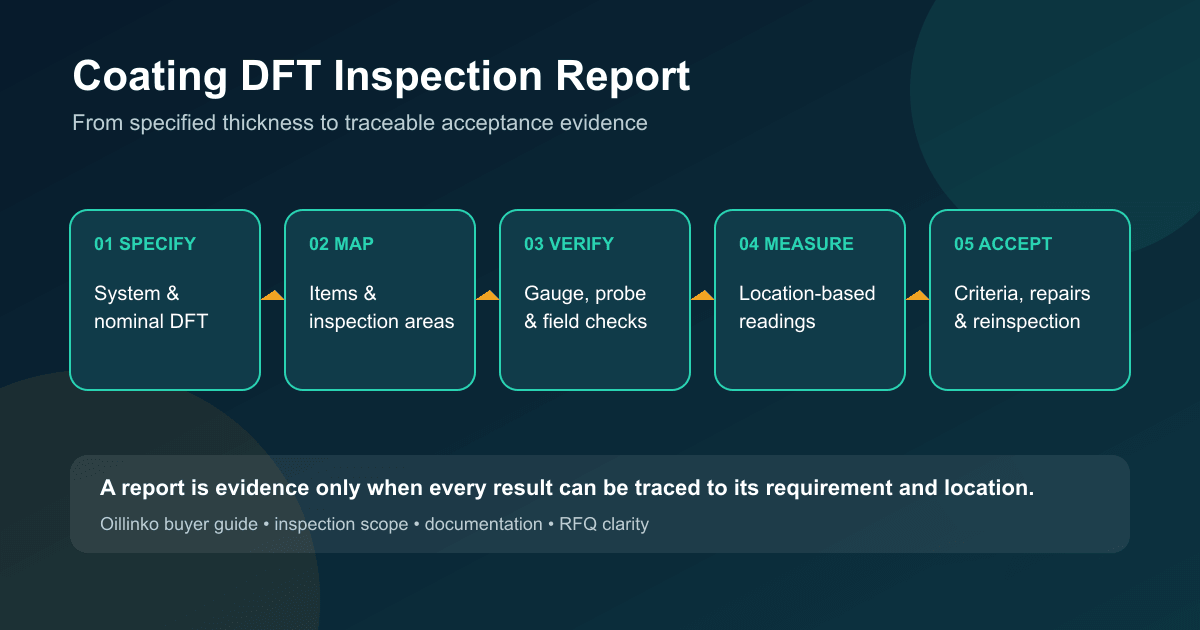
Coating DFT Inspection Reports: A Buyer’s Guide
Define the measurement basis, inspection areas, acceptance criteria and traceable records for dry-film thickness.
Read article →
· 8 min read
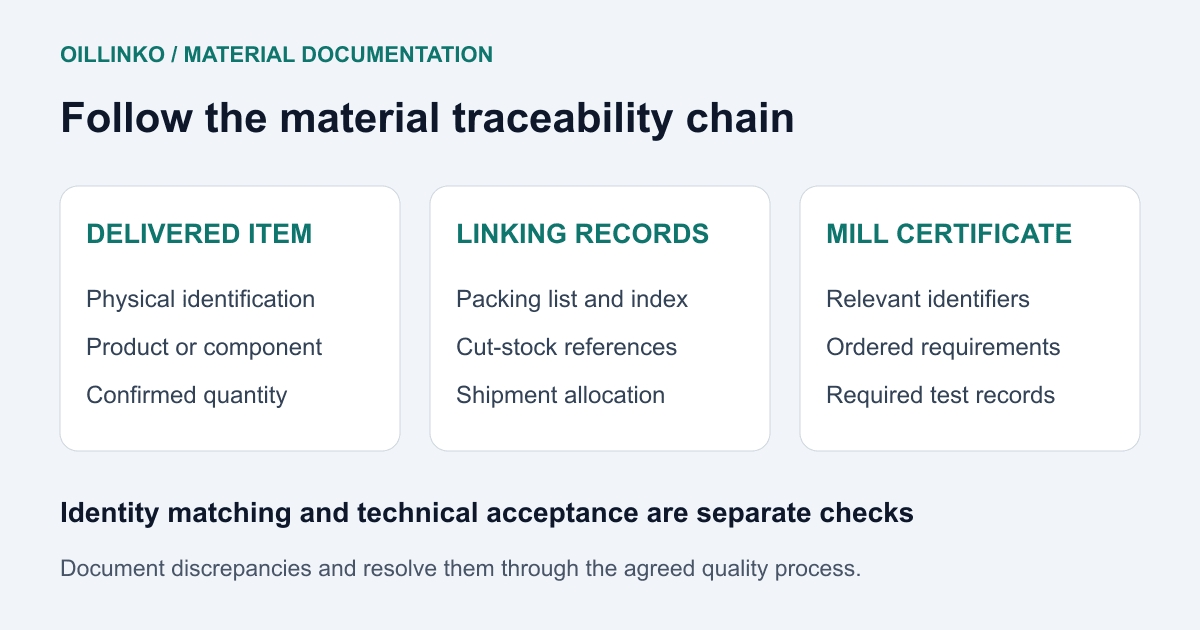
Heat Number Traceability: Matching Materials to Mill Certificates
Connect delivered materials to their mill certificates and resolve gaps in the documentary chain.
Read article →
· 9 min read
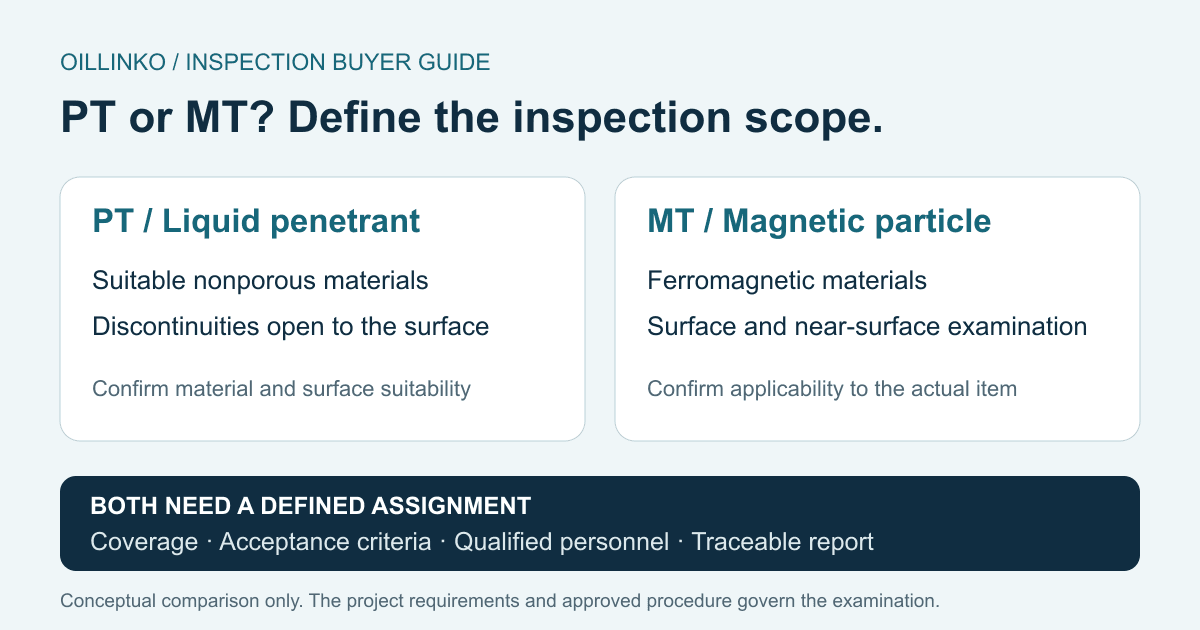
Liquid Penetrant vs Magnetic Particle Testing: RFQ Guide
Compare PT and MT applicability, then define inspection coverage, acceptance criteria and traceable reporting.
Read article →
· 8 min read
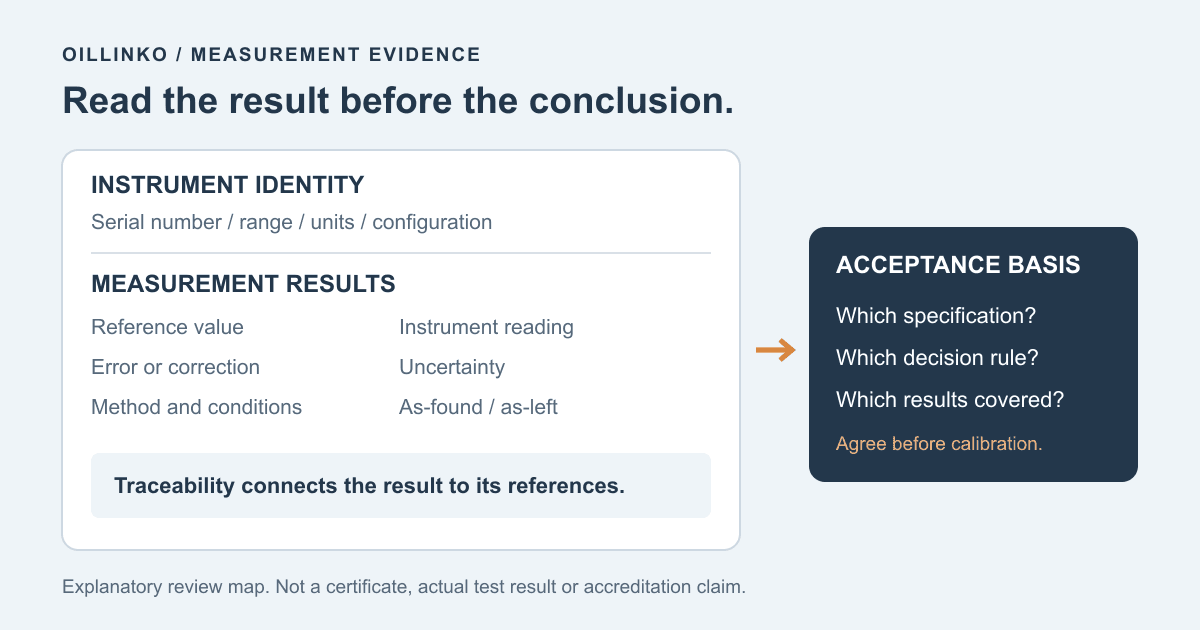
Pressure Gauge Calibration Certificates: A Buyer’s Guide
Check the instrument identity, measured results and acceptance basis before treating a calibration certificate as approval.
Read article →
· 8 min read
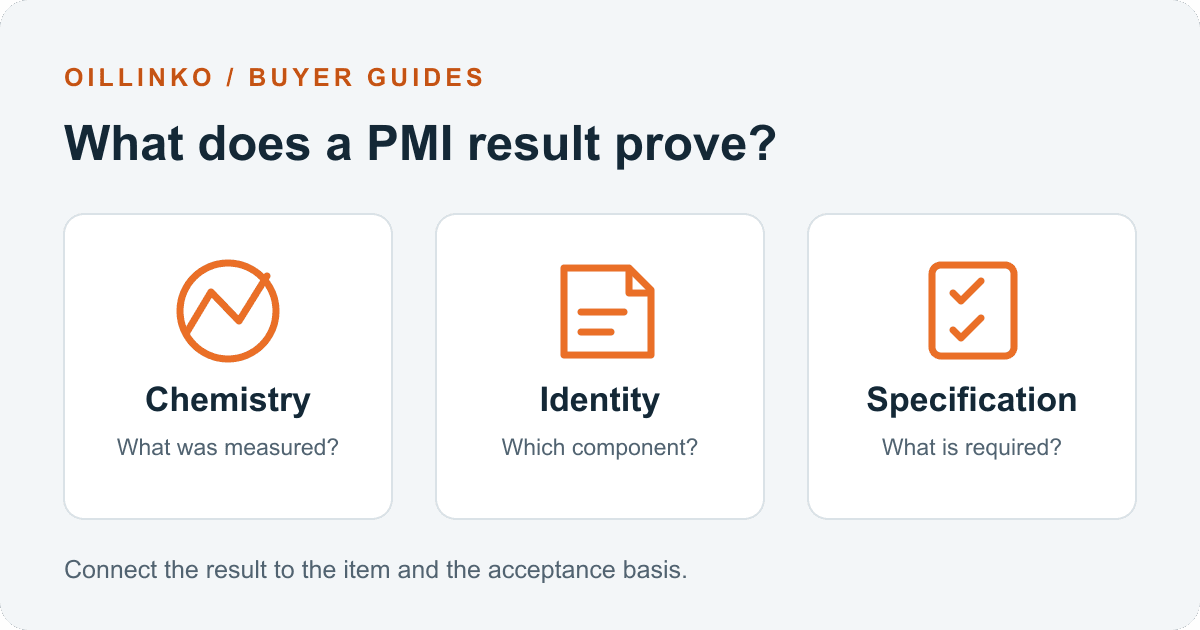
Positive Material Identification: XRF vs OES for Buyers
Choose a PMI method that can measure the elements your purchase specification actually needs.
Read article →

· 6 min read
EN 10204 Material Certificates Explained (2.1, 2.2, 3.1, 3.2)
The difference between a 3.1 and a 3.2 certificate — and when you need one
Read article →

· 8 min read
Third-Party Inspection (TPI) for Oil & Gas Equipment
What TPI covers, who the agencies are, and how to specify witnessing level
Read article →