
Equipment Maintenance & Repair
Define the repair before authorizing work.
Read moreRead less about this category
Describe the equipment condition before deciding the remedy
Industrial equipment maintenance and repair enquiries begin with an asset and an observed need, rather than a predetermined list of replacement parts. This category covers the repair, overhaul and maintenance subjects already represented in the Oillinko service catalogue. It helps buyers describe the work for assessment by a suitable provider. A pump that has lost performance, an instrument with inconsistent readings and a valve that does not operate as expected require different investigations. The enquiry should describe the observed condition and available evidence without claiming that the cause has already been established.
Provide manufacturer, model, serial number, equipment tag and relevant drawings. Include service history, previous repairs and available inspection or condition reports. Explain when the problem was observed and whether it is continuous or associated with particular operating conditions. Photographs can support the request, but they may not reveal internal damage or configuration differences. If the equipment remains installed, state what information can be collected under the site's approved arrangements. Do not perform intrusive checks merely to complete a commercial enquiry without the responsible site's authorization and procedures.
Separate assessment from authorized repair
The control valve repair RFQ guide applies this distinction to a valve, actuator and positioner assembly. It explains which identification records, diagnostic evidence, approval boundaries and final reports help a buyer compare a proposed overhaul.
Where the condition is uncertain, an initial assessment can provide the basis for a subsequent repair proposal. Define the assessment deliverables, the permitted scope and any limits on disassembly. Ask the provider to explain how it will report findings, recommended work and parts requiring replacement. The purchaser should know which activities are included in the initial price and which require further authorization. This prevents an enquiry for an evaluation from becoming an open-ended commitment to repair every defect that might be discovered after the equipment reaches a workshop.
The assessment may need inspection, measurements or testing relevant to the equipment. The inspection and testing guide explains how to frame the method, coverage and reporting scope. Results should remain traceable to the asset and the conditions under which they were obtained. A measurement report does not necessarily include a complete engineering recommendation, so specify that deliverable separately if it is needed. Likewise, a commercial repair offer should identify its technical basis rather than presenting a replacement parts list without explaining the findings that justify it.
Establish repair boundaries and replacement compatibility
Define whether the work is carried out in a workshop or at the installed equipment. Removal, transport, lifting, reinstallation and final connections may sit outside the repair provider's scope. Identify which party handles each interface and what site or equipment preparation is required. If specialist tools or manufacturer support are needed, ask the provider to identify them. A quotation for overhaul should specify the included inspection, parts, labor and tests, together with any provisional items whose cost depends on the condition found during the agreed assessment.
Replacement parts need the same identification discipline as new equipment. A familiar product family or nominal dimension may not be enough to establish interchangeability. Ask whether the proposed parts are original or alternative, and require relevant fit and material differences to be stated. The equipment selection category and materials documentation guide provide complementary purchasing questions. Any change to the original configuration should follow the responsible engineering review and acceptance process rather than being treated as a routine substitution solely because a part is available sooner.
Use the manufacturer's instructions and site requirements
Operating, disassembly, repair and commissioning instructions must apply to the actual equipment and configuration. A general guide cannot set tightening values, clearances, pressure limits or safe isolation arrangements for an unidentified asset. Obtain the relevant manufacturer documentation and identify any project requirements that supplement it. Where instructions are unavailable or the equipment has been modified, make that uncertainty part of the technical assessment. The provider should explain what engineering information is needed to establish an acceptable scope rather than relying on remembered values from a similar machine.
The operator remains responsible for the site arrangements within its scope, including permits, hazardous energy control and authorization to return equipment to service. HSE's guidance on safe isolation explains why isolation planning is a distinct part of maintenance preparation. It is UK guidance and does not replace applicable local requirements or approved site procedures. A commercial request can identify the required responsibilities and evidence, but it cannot authorize field execution or establish that an asset is safe to work on merely because a repair date has been agreed.
Agree testing and completion evidence
Post-repair testing should be appropriate to the work performed and the agreed acceptance basis. Ask which characteristics will be measured, under what conditions and against which criteria. The final record should identify the asset, completed work, installed parts and any remaining limitations. The pump factory testing and commissioning article illustrates why workshop evidence and installed-system readiness are different subjects. A repaired component may meet its workshop acceptance requirements while the surrounding plant still needs separate checks before operation can resume.
Define warranty or workmanship terms for the actual repair scope and identify exclusions. Parts not included in the repair, changes in operating conditions and other contractual limits should be visible in the proposal. Ask about preservation and storage requirements if the equipment will not be reinstalled immediately. Handover should include the information the maintenance team needs to identify what changed and to plan subsequent care. A brief statement that equipment was serviced is less useful than a traceable record of the agreed work and its acceptance evidence.
Prepare a scoped service enquiry
Submit the equipment identification, condition information, required schedule and expected deliverables through the inspection, engineering and repair service catalogue. State whether the immediate request is for assessment, a defined repair or a planned maintenance package. Oillinko receives the enquiry for review and provider coordination; availability, qualifications and the detailed work scope are confirmed for the particular requirement. The wider oil and gas services guide explains schedule and commercial interfaces. Additional maintenance articles will be published in this category as they are prepared and reviewed.
Define plate heat exchanger service boundaries
The plate heat exchanger cleaning and reconditioning guide explains how to separate cleaning, plate examination, gasket replacement and frame work in a service enquiry. Use it to identify conditional repairs, allocate site and transport responsibilities, and agree the evidence needed at handover before comparing offers.
Define oil flushing acceptance before requesting quotations
The oil flushing service RFQ guide explains how to identify circuit boundaries, obtain the applicable cleanliness requirement and agree sampling evidence. It also covers commercial exclusions and handover responsibilities, helping buyers compare service proposals without treating a particle contamination code as a universal acceptance target.
Articles in Equipment Maintenance & Repair
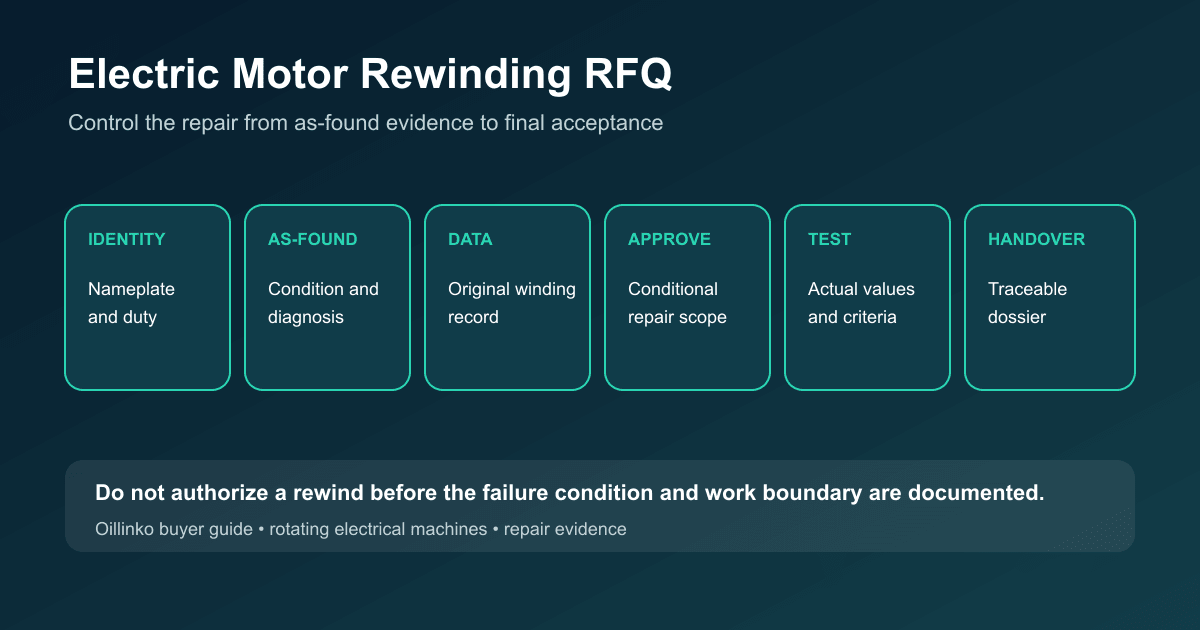
· 9 min read
Electric Motor Rewinding RFQ: Tests, Data and Acceptance Records
Define the as-found evidence, authorized repair boundary, winding data, final tests and handover records.
Read article →
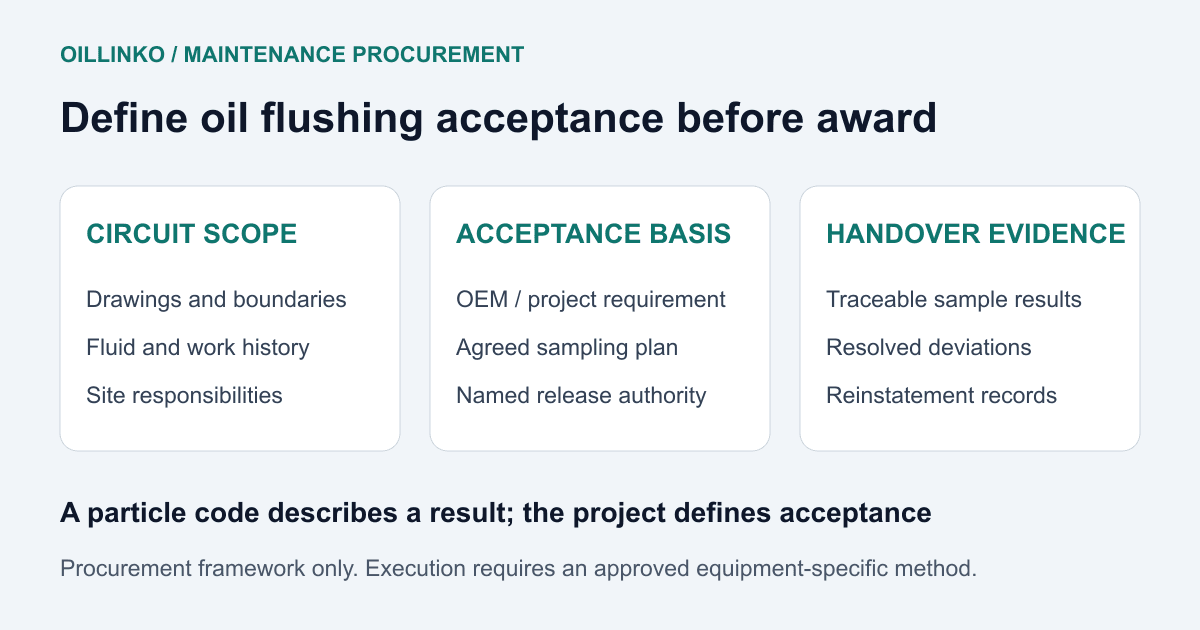
· 8 min read
Oil Flushing Service RFQ: Cleanliness Targets and Acceptance
Define oil flushing boundaries, cleanliness requirements, sampling evidence and handover responsibilities.
Read article →
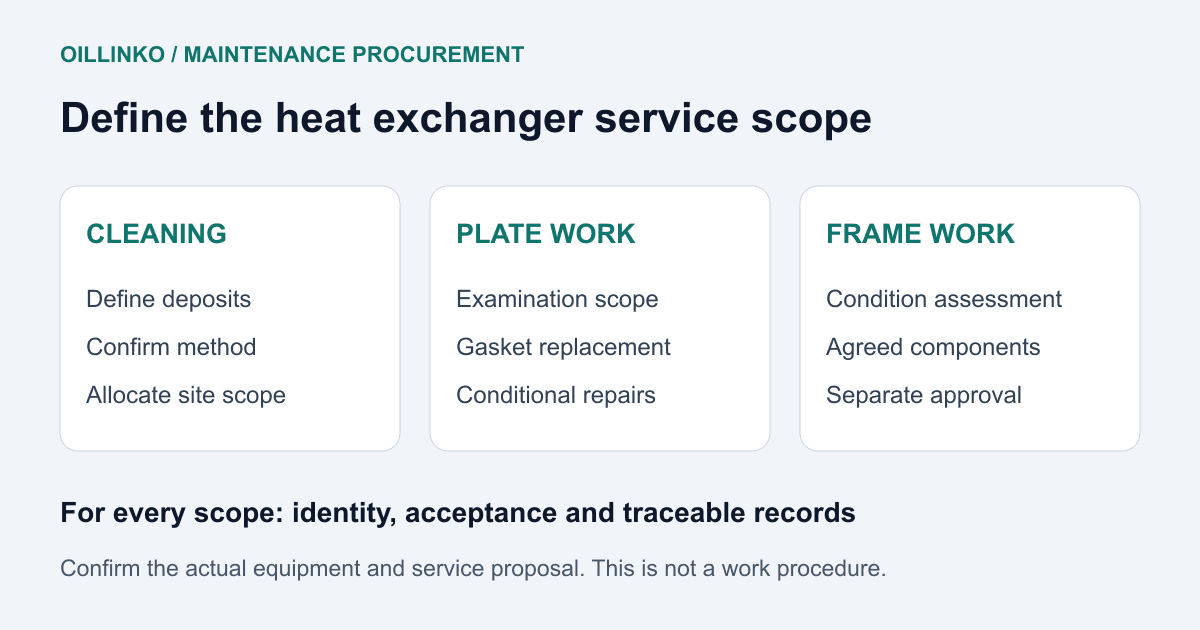
· 9 min read
Plate Heat Exchanger Cleaning vs Reconditioning: RFQ Guide
Compare cleaning, plate reconditioning and frame repair through a clearly defined service scope.
Read article →
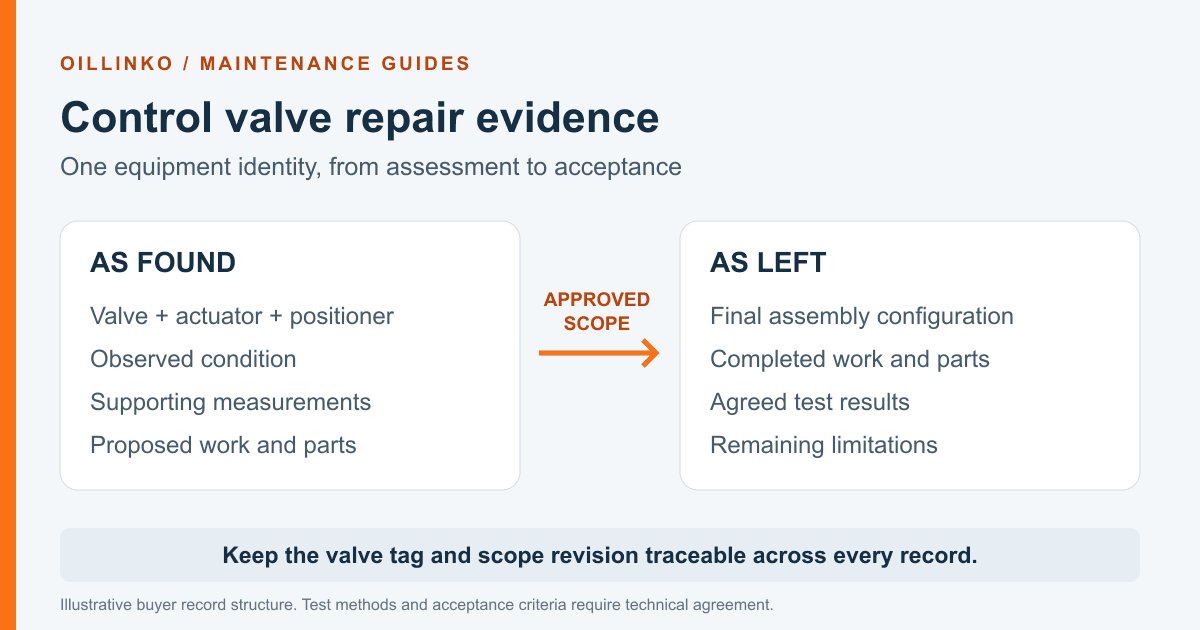
· 8 min read
Control Valve Repair RFQs: Scope, Tests and Reports
Request evidence about the valve, actuator and positioner before approving an overhaul quotation.
Read article →