
Supplier Selection & RFQs
ISO 9001 Certificate Verification in an Equipment RFQ
A valid management-system certificate is one part of a supplier and item evidence review.
By OillinkoPublished Updated 8 min read
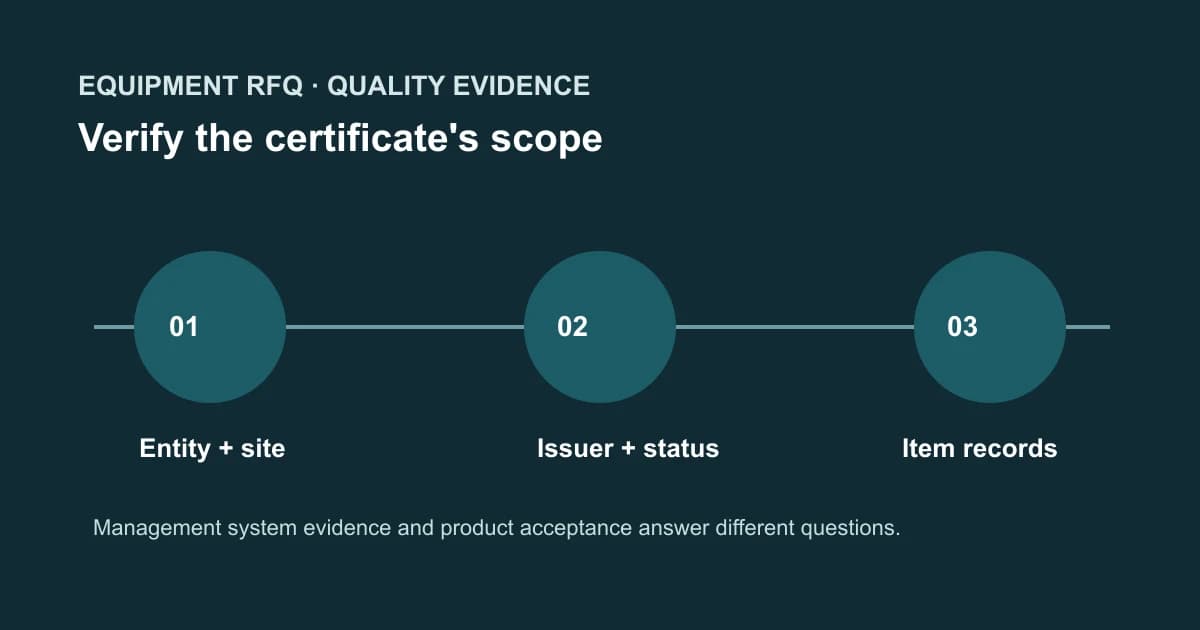
An ISO 9001 certificate can help an equipment buyer assess a proposed supplier's quality management system, but it does not certify the quoted valve, pump or spare part. Verify the named legal entity, certified activities, site coverage, issuing body, accreditation and current status. Then review the product-specific drawings, test records and traceability separately. This distinction prevents a valid company certificate from being used as a substitute for evidence that a particular line item meets the purchase specification.
This guide is for comparing RFQ responses and maintaining a clear approval file. It does not prescribe a universal supplier-qualification threshold. A project's approved procurement procedure, item criticality and contract requirements may call for additional evidence. Keep each requirement and its reviewer visible so that a checked certificate is treated as one input to a sourcing decision, not a blanket endorsement of a manufacturer, trader or delivered product.
Match the certificate to the proposed entity
Start with the exact company named on the quotation and purchase-order path. A certificate issued to a group parent, a sister business or a similarly named organization may not cover the legal entity taking the order. Record the certificate number, organization name, address and stated sites. Ask who will manufacture, inspect and supply the item, because those roles may involve different entities. If the bidder relies on another entity's certificate, request an explanation of that relationship and the relevant scope rather than silently transferring the claim.
Read the activities printed on the certificate. A scope for trading or distribution is not a scope for manufacturing, welding or testing. Conversely, a manufacturing scope does not establish that every offered design or plant process is covered. Match the described activity to the part of the quotation for which the certificate is offered. Record any location or activity mismatch as a clarification, and allow the responsible buyer to decide whether it matters for the specific procurement.
Verify status with the issuing body
Use the certification body's official register or contact route to check the number, entity, scope and status at the time of review. The International Accreditation Forum's purchaser guidance points buyers first to the certification body named on a certificate when confirming validity. A copied logo, an undated PDF or a search result for a similar business does not establish that a certificate is currently valid for the proposed organization.
If accredited certification is required, identify the accreditation body and check the certification body's relevant accreditation scope. The ISO explanation of conformity assessment distinguishes certification from the standards ISO develops; ISO itself does not issue certificates. Do not describe a supplier as “ISO certified by ISO.” Keep the certificate, verification date, official source and any unresolved discrepancy together in the RFQ record. If a database has no result, ask the issuer directly before concluding that the document is invalid.
Keep item acceptance evidence separate
An accredited management-system certificate evaluates the organization and its system. It does not itself certify that a particular shipped component meets a dimensional drawing, material grade or pressure-test requirement. An ISO auditing guidance on expected outcomes explicitly separates management-system certification from product certification. Ask for the actual item documents specified in the enquiry, with identification that connects them to the proposed goods.
For example, a buyer requesting a replacement valve might need an approved drawing revision, nameplate details, material records, applicable inspection and test reports, and a certificate of conformity to the purchase requirements. The precise package depends on the approved specification and order terms. The EN 10204 material-certificate guide explains why a material document has its own issuer, test and traceability questions. Neither that document nor an ISO 9001 certificate closes every acceptance item by itself.
Make the RFQ comparison auditable
Create separate columns for the quoted legal entity, manufacturer if disclosed, certified activities, certificate status, item-specific records and outstanding exceptions. Mark a claim as verified only for the scope and date actually checked. If one bidder offers a current management-system certificate but omits required product reports, show both facts. If another offers extensive test records but an unclear organizational certificate, keep that distinction visible too. A single “quality approved” tick hides the work still needed before award.
Ask bidders to identify any subcontracted manufacturing or testing and which entity will issue each record. Request a list of documents supplied with the equipment and any documents requiring separate cost or lead time. Keep drawing revisions, item tags and quantities aligned across the RFQ, technical offer and eventual order. The RFQ revision-control guide helps prevent an otherwise convincing certificate package from being attached to an obsolete specification.
When the offer is routed through a trading company, ask which parts of the evidence belong to the trader's order process and which belong to the proposed manufacturer or testing body. The broader equipment-trading-company review covers registration, relationships and commercial checks. This narrower certificate review provides a repeatable way to document one credential without implying that a directory listing, certificate or quotation proves partnership, stock or product compliance.
Send the equipment specification, proposed certificate and item-document list through Oillinko's service enquiry route for manual review and routing. State any required certification or accreditation in the enquiry rather than assuming every supplier has it. The final qualification and acceptance decision should use the contract requirements and evidence for the exact goods offered.