
Logistics & Delivery
Coordinate equipment through to delivery.
Read moreRead less about this category
Plan around equipment readiness and project need
Oil and gas equipment logistics starts before goods are ready to leave a factory. Packing requirements, inspection release, document preparation and destination arrangements can influence the order schedule. This category covers delivery coordination and multi-vendor shipment questions represented in Oillinko's procurement and project logistics catalogue. It is useful for buyers assembling several equipment lines, traders coordinating different manufacturers and project teams managing a required-on-site date. The aim is to define responsibilities and readiness clearly enough that a quoted delivery period can be understood in practical terms.
Distinguish the date an item finishes manufacture from the date it can be collected, shipped, cleared and received. These milestones may depend on drawing approval, testing, final documents or payment conditions. Ask the supplier which event starts the quoted lead time and what assumptions support the delivery estimate. A date described only as delivery in several weeks can conceal whether the supplier means dispatch from the factory or arrival at the destination. Align the commercial offer with the project's actual milestone before using it to plan installation or a shutdown.
Choose consolidation deliberately
The article on consolidated shipments and multi-vendor orders explains why buyers sometimes combine equipment from several suppliers. Consolidation can simplify parts of the handover and transport process, but it can also introduce extra handling, storage and dependency on the latest ready item. Compare the complete plan with direct shipment options. The decision depends on cargo characteristics, required dates and the locations involved; there is no universal shipment size or number of vendors at which consolidation automatically becomes the better choice.
Separate urgent equipment from items that can wait. A small critical spare should not necessarily be delayed until a large fabrication order is complete. Equally, several small consignments can generate duplicated handling and documentation work. Establish the priority of each line and the acceptable partial-delivery arrangements. When a consolidation point is proposed, identify who receives the goods, checks quantities, preserves package identity and authorizes onward shipment. These responsibilities should be explicit so that a damaged package or missing document is addressed before it becomes part of a larger consignment.
Define packing and cargo information
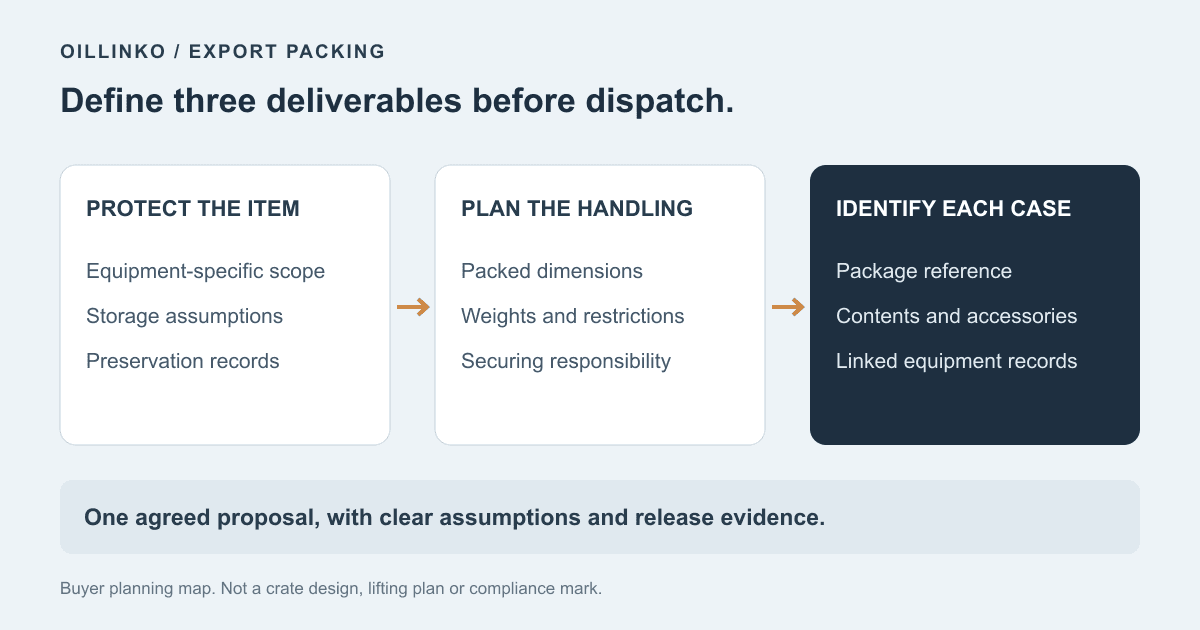
The export packing RFQ checklist separates equipment protection, transport handling and package records. Use it to compare supplier packing proposals and identify missing assumptions before dispatch.
Transport planning needs dimensions, weights and the characteristics of the actual packed cargo. A catalogue net weight is not a substitute for a final packing list. Ask for the number of packages, gross weights and dimensions as they become available, and identify any changes that affect the transport plan. Equipment that requires special lifting, orientation or protection should be clearly described. The manufacturer should provide handling and preservation requirements relevant to the supplied item, rather than leaving the carrier to infer them from the appearance of the crate.
Long storage periods and changing environments can affect equipment preservation needs. Ask how the offered packing supports the planned journey and any expected storage before installation. Some components may require specific inspection or preservation actions during storage; obtain those instructions from the manufacturer. Keep package labels tied to purchase order and equipment references so receiving personnel can identify the contents without unnecessary unpacking. For mixed orders, distinguish complete assemblies, loose accessories and documentation packages to reduce the chance that an essential small item becomes separated from its parent equipment.
Agree delivery terms and the named place
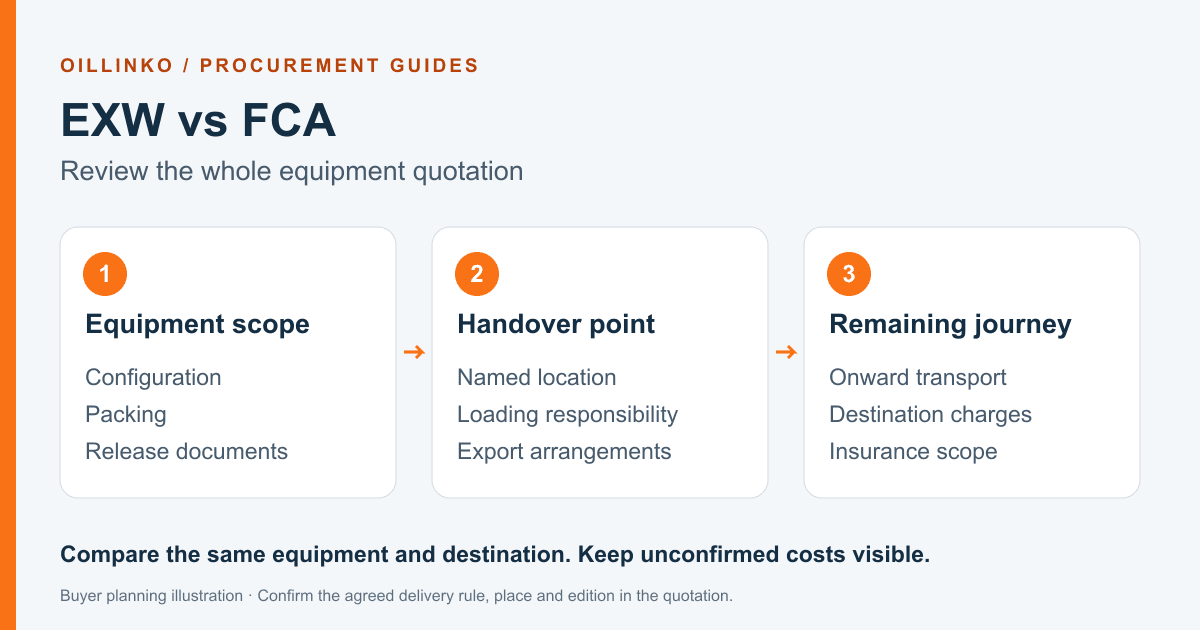
For quotations collected from a factory or a nominated terminal, the EXW vs FCA equipment buyer guide compares loading and export responsibilities. It explains how to specify the handover and compare the remaining shipment costs on the same basis.
ICC's Incoterms 2020 resource explains how the rules allocate relevant obligations, costs and risks between seller and buyer. Specify the selected rule, named place and edition in the commercial agreement. Do not assume that payment terms, transfer of ownership or technical acceptance are settled merely by choosing an Incoterms rule. Those matters require their own agreed terms. The rule should also fit the actual transport arrangement and the parties' ability to carry out the responsibilities assigned to them.
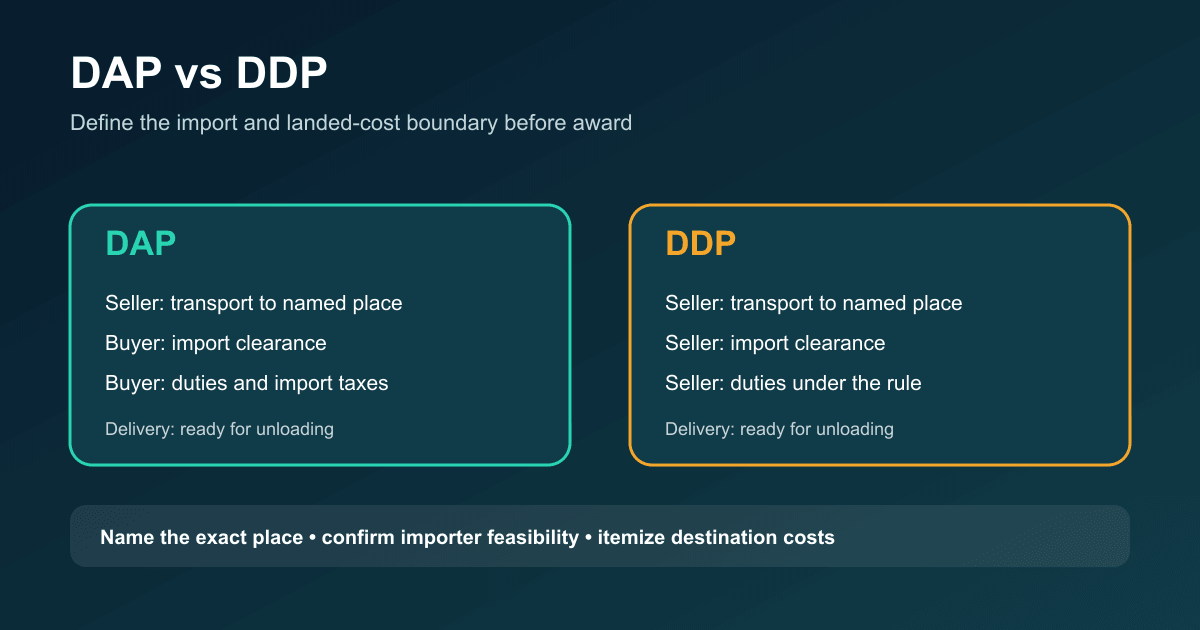
Clarify who arranges carriage, insurance, export and import formalities, and destination handling within the agreed scope. Country-specific requirements must be checked for the actual transaction with the responsible parties. Avoid treating a generic shipping estimate as a complete landed cost where duties, taxes or handling remain unconfirmed. Ask which costs are included and which are provisional. If the delivery point changes, recheck the allocation of responsibilities and cost assumptions rather than updating only the address on the packing list or purchase order.
Keep technical release separate from shipping documents
Inspection release and the material document package answer different questions from the invoice and packing list. The materials documentation guide explains traceability evidence, while the inspection and testing guide covers inspection scope. Agree which technical records must be accepted before dispatch and which may follow under the contract. A shipment should not be described as fully documented merely because a commercial invoice exists. The receiving project team needs to know whether the documents required for equipment acceptance have actually been completed and linked to the supplied items.
Create a handover process for quantities, package condition and any visible discrepancies at each agreed transfer point. If goods pass through a consolidation facility, preserve records showing what arrived and what was forwarded. Establish the communication route for missing parts or damaged packing, including who can authorize corrective action. These arrangements make the project less dependent on reconstructing events after the equipment reaches its destination. They also help distinguish a manufacturing nonconformity from a packing, handling or transport issue when the evidence is reviewed.
Prepare a logistics enquiry with usable inputs
Submit collection and delivery locations, readiness dates, packing information and any special handling requirements through the project logistics service catalogue. State which details are preliminary and when final cargo data is expected. Oillinko can review the requirement as part of sourcing and coordination, with the eventual service scope confirmed in the proposal. The procurement guide connects delivery planning back to the order terms, helping buyers avoid treating logistics as an afterthought once the equipment has already been purchased.
Articles in Logistics & Delivery
· 9 min read
DAP vs DDP for Oil & Gas Equipment Buyers
Compare import clearance, duties, destination delivery and quotation assumptions before selecting a delivered trade term.
Read article →
· 9 min read
Export Packing for Oil & Gas Equipment: RFQ Checklist
Define equipment protection, package identity and transport responsibilities before comparing packing quotations.
Read article →
· 8 min read
EXW vs FCA for Oil & Gas Equipment Buyers
Compare collection, loading and export responsibilities before choosing an equipment quotation.
Read article →

· 8 min read
Consolidated Shipments and Multi-Vendor Orders: Why Buyers Use a Single Sourcing Partner
How combining multiple vendors into one shipment actually works, and when it's worth it
Read article →