
Inspection & Testing
Agree what acceptance will prove.
Read moreRead less about this category
Write an inspection scope that can be assessed
Oil and gas equipment inspection is useful when it answers a defined question about conformity or condition. This category covers third-party inspection, testing, material examination and calibration enquiries represented in the existing catalogue. It focuses on the evidence produced, rather than on performing a repair or authorizing an asset's operation. A request to inspect equipment should identify the equipment, the purpose of the inspection and the expected report. Without that context, different providers can propose very different activities while appearing to quote the same service.
Begin with the asset or purchase order identification, item quantities, locations and available technical records. Explain whether the work takes place during manufacture, before shipment, at receiving or on installed equipment. A provider may need drawings, specifications, previous reports or a proposed inspection plan to evaluate the assignment. If the appropriate method is not yet established, ask for a recommendation and identify who will approve it. The enquiry should not imply that a particular test can resolve every possible defect or condition without regard to material, geometry and accessibility.
Define method, coverage and limitations
An inspection scope needs a clear description of what will be examined and how much of it is included. Coverage can concern selected items, defined locations or a specified sampling basis, depending on the project. State the acceptance criteria and reference documents established by the responsible technical authority. If the provider proposes a different method or coverage, require the difference to be documented. A report should distinguish the areas actually examined from those assumed satisfactory or left inaccessible, because that distinction affects what the purchaser can conclude from the findings.
Dimensional checks, material identification and non-destructive examination serve different purposes. A dimensional report does not establish chemical composition, and a material identification result may not provide every property required by the product specification. Ask for the relevant technique and reporting basis rather than assuming that a single test label covers the whole acceptance requirement. The material documentation category explains the supporting records that may be needed alongside inspection. Combining complementary evidence is useful only when each record can be connected to the item and its specified acceptance question.
Agree witness and review points
The article on third-party inspection for oil and gas equipment explains the practical distinction between observing an activity and reviewing its records. Agree where the purchaser or appointed inspector must attend, what notification is required and whether work can continue before approval. These decisions belong in the inspection and test plan before the relevant manufacturing stage. If an attendance point is missed, document how the resulting evidence gap will be evaluated instead of assuming that a later signature recreates an observation that did not occur.
Attendance also has a commercial and scheduling basis. Identify the expected duration, work location, site readiness and reporting time. A factory visit can be delayed by incomplete preparation or changed production dates, so define how postponements and additional visits are handled. If one inspection assignment covers several orders or product families, make that boundary explicit. The provider should know whether it is responsible for each line item, selected witness activities or a consolidated report. This prevents a broad purchase order title from becoming an undefined expectation of continuous surveillance.
Verify competence for the requested assignment
The appropriate qualifications depend on the method, industry requirements and intended use of the findings. ISO/IEC 17020 provides a framework for inspection bodies, but the buyer must still verify the actual provider's relevant scope and status. Project specifications may add personnel qualifications, independence requirements or client approvals. Request evidence that applies to the assignment rather than a collection of unrelated certificates. Where laboratory work is involved, specify the required test and reporting expectations so the suitability of the laboratory can be assessed for that work.
Calibration enquiries should identify the instrument manufacturer, model, serial number, measurement range and intended calibration points. State any required uncertainty, reporting format or accreditation scope established by the project. The pressure gauge calibration certificate guide explains how to review instrument identity, measurement results and the agreed acceptance basis. Clarify whether adjustment, as-found and as-left results, or repair are included. An instrument that requires repair may need a separate authorization before the calibration can be completed. The maintenance and repair category explains how to handle that change in scope without assuming that a calibration quotation includes replacement parts or an unrestricted repair effort.
Keep test conditions and conclusions connected
For factory acceptance tests, agree the test procedure, configuration, instruments and acceptance criteria in advance. The offered equipment should be identified in the resulting records, together with the conditions under which the test was performed. The pump testing and commissioning article provides an example of how factory and site evidence differ. A successful factory test does not replace installation checks or prove system readiness. The project team must evaluate the report within its actual scope rather than extending the conclusion to untested conditions or assemblies.
Reports should state findings clearly and identify unresolved deviations, limitations and items requiring further assessment. Agree who reviews the report and who can accept a concession or request additional work. An inspection result can inform an engineering decision, but it is not automatically that decision. If the contract requires a separate technical assessment, name the deliverable and responsible party. This is particularly important when inspection concerns installed equipment whose continued use depends on the operator's engineering and regulatory obligations.
Submit the requirement and supporting records
For a surface examination enquiry, the liquid penetrant versus magnetic particle testing guide separates material applicability from coverage and acceptance. Use it to organize component identities, examination areas and reporting responsibilities before comparing inspection prices.
Use the inspection and engineering service catalogue to describe the scope to Oillinko, including the worksite, quantities, method or objective, dates and required deliverables. For broader condition work, the asset integrity and survey catalogue may provide a more appropriate starting point. Enquiries are reviewed before a specific provider and scope are proposed. The inspection and material quality guide ties the individual assignment back to the complete acceptance package, so the final report serves a clear project purpose.
Articles in Inspection & Testing
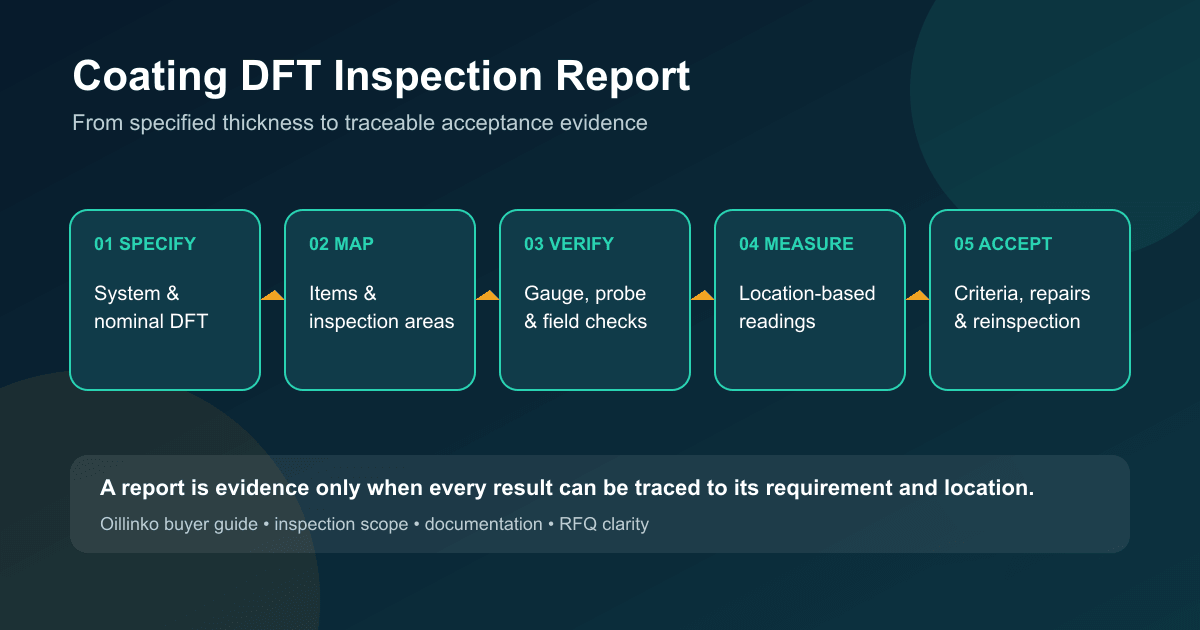
· 9 min read
Coating DFT Inspection Reports: A Buyer’s Guide
Define the measurement basis, inspection areas, acceptance criteria and traceable records for dry-film thickness.
Read article →
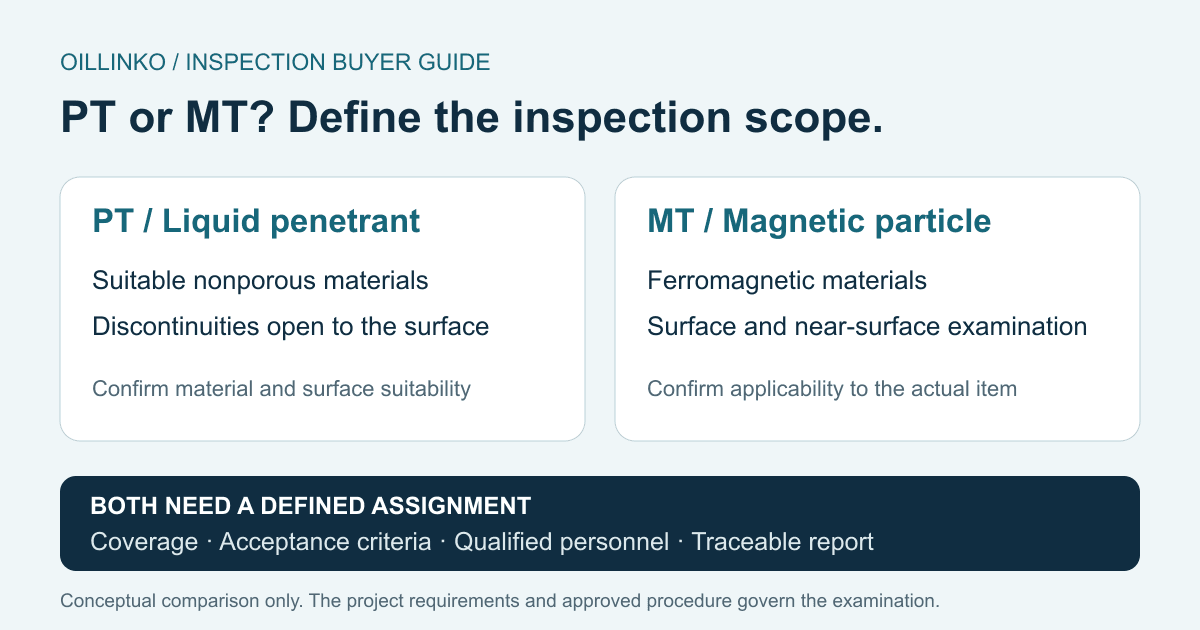
· 9 min read
Liquid Penetrant vs Magnetic Particle Testing: RFQ Guide
Compare PT and MT applicability, then define inspection coverage, acceptance criteria and traceable reporting.
Read article →
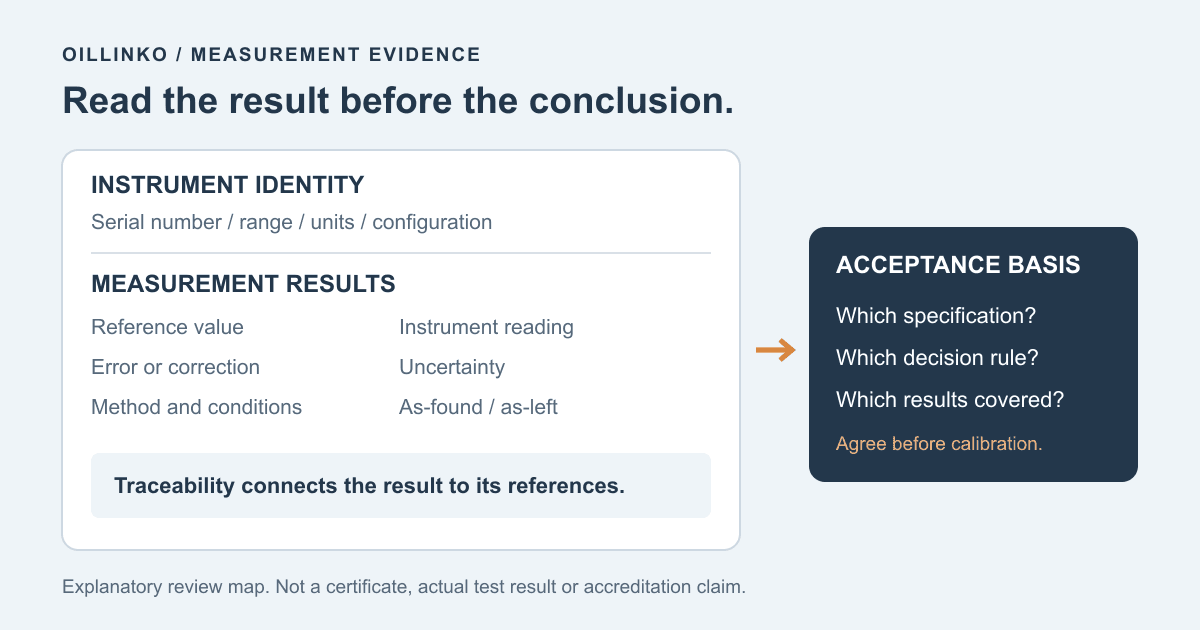
· 8 min read
Pressure Gauge Calibration Certificates: A Buyer’s Guide
Check the instrument identity, measured results and acceptance basis before treating a calibration certificate as approval.
Read article →
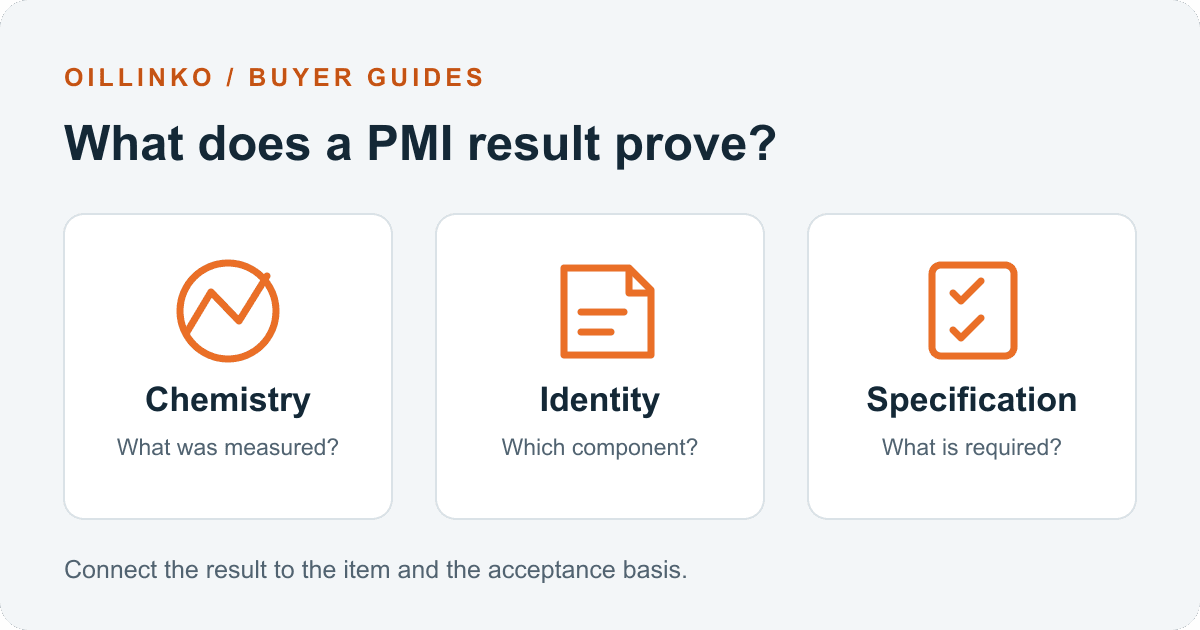
· 8 min read
Positive Material Identification: XRF vs OES for Buyers
Choose a PMI method that can measure the elements your purchase specification actually needs.
Read article →

· 8 min read
Third-Party Inspection (TPI) for Oil & Gas Equipment
What TPI covers, who the agencies are, and how to specify witnessing level
Read article →