
Valves & Actuation
Solenoid Valve RFQs: Differential Pressure and Coil Data
Compare the operating envelope and electrical scope of the exact proposed assembly.
By OillinkoPublished Updated 6 min read
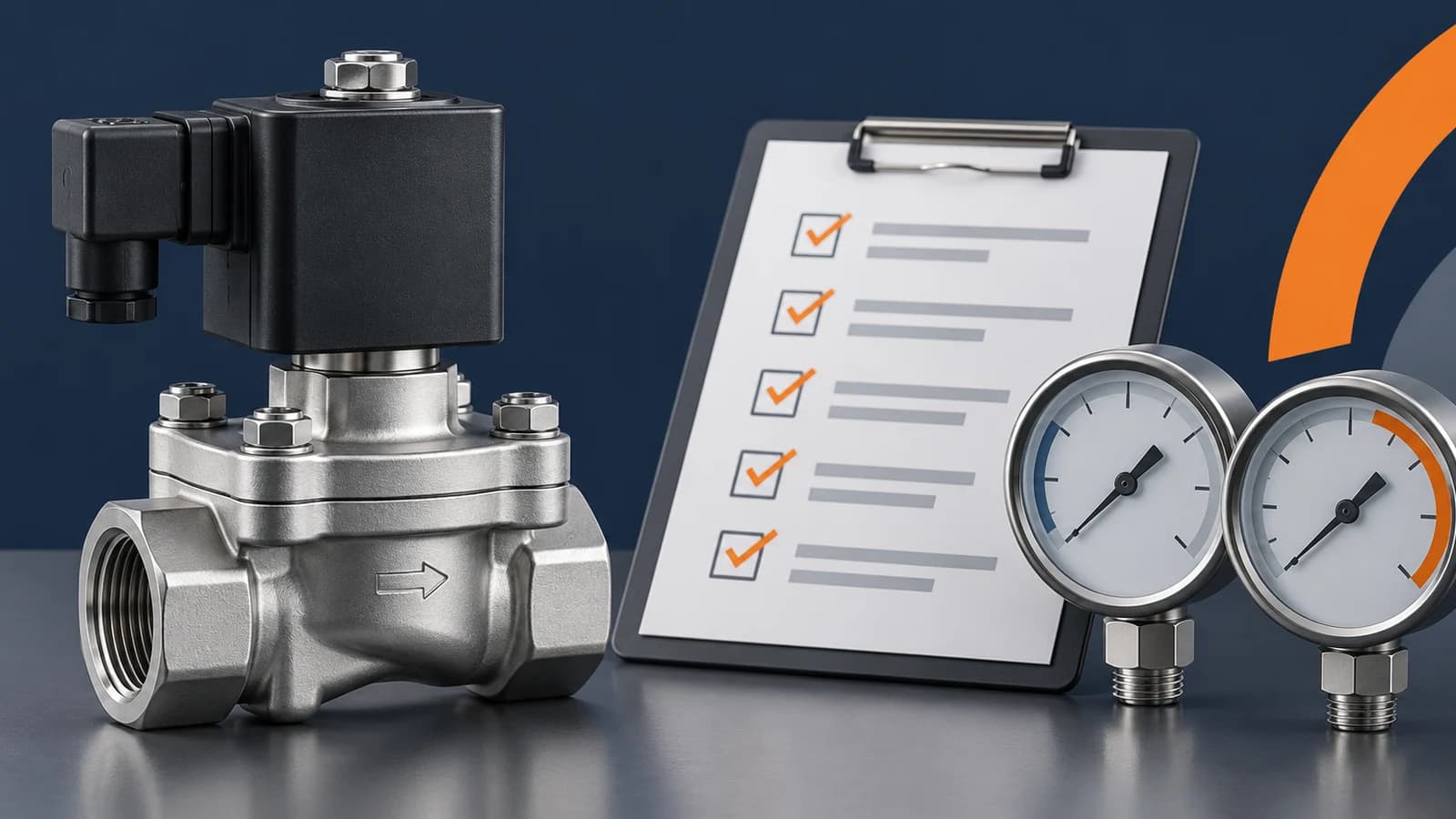
A solenoid valve RFQ needs the operating conditions on both sides of the valve and the complete electrical supply, alongside size and material. A pressure range on a catalogue page does not establish that the proposed valve will open, close or pass the required flow in your installation. Ask the supplier to identify the exact valve and coil combination and explain its suitability against the stated duty. This guide helps buyers assemble that information and compare quotations without treating a similar model description as technical acceptance.
Keep confirmed requirements separate from missing inputs. If the fluid temperature, outlet pressure or supply frequency is unknown, flag it for clarification. Filling the gap with an assumption can make two apparently comparable offers describe different assemblies. A useful enquiry connects the process case, valve function, electrical interface and included accessories to one identifiable purchase line.
Describe inlet and outlet conditions for every relevant case
Provide the minimum, normal and maximum inlet pressures, together with the corresponding outlet pressures. State whether each pressure is gauge or absolute and use consistent units. Explain whether the outlet feeds another pressurized system, an open vessel or a line whose pressure changes during the process. Ask the responsible engineer to identify the relevant operating cases; buyers should not infer them from a pump rating or a single pressure-gauge photograph.
Request a written comparison between those cases and the offered assembly's minimum and maximum operating differential pressure. Include any required operation when the pressures approach equality, and ask the supplier to identify cases it cannot support. Keep the permitted system pressure and the pressure difference across the valve as separate entries in the evaluation. Neither entry can substitute for the other, and a maximum pressure figure alone leaves the low differential case unresolved.
Identify the operating principle and required function
Bürkert's solenoid valve overview distinguishes valves operated directly by the coil's magnetic force from servo-assisted designs that also use medium pressure. Its selection guidance connects the operating principle to pressure conditions and flow requirements. This is a reason to ask for the exact design and its operating limits, rather than to choose a universal design from the words “low pressure” or “large pipe.” Product-specific documentation must establish the proposed configuration's capability.
Describe the required flow path, number of connections and normal state when the coil is de-energized. Identify what the plant needs during a normal shutdown and any separate failure response requirement. A normally closed label describes a valve function; it is not evidence that the component is approved for a particular protective function. Keep process safety requirements with the responsible engineering review and request the applicable evidence if such a function is part of the purchase.
Connect the medium, wetted materials and flow requirement
Name the medium precisely enough for the supplier to assess it. Include the fluid and ambient temperature ranges, relevant composition, viscosity information where needed, and any expected contamination or solids. Ask for the actual body and seal materials of the quoted variant. Do not accept a generic family brochure as proof that every variant uses the same elastomer or has the same compatibility. Proposed material substitutions should remain visible as deviations until reviewed.
State the required flow and the allowable pressure loss for the relevant cases, with the engineer's sizing basis where available. The connection size identifies an interface; it does not independently define the required flow performance. Ask the vendor to return a sizing explanation, the proposed flow coefficient and the conditions used. When only an indicative offer is possible, retain the missing inputs in the quotation comparison rather than silently promoting the offer to a confirmed selection.
Specify the coil and electrical interface together
Record voltage, AC or DC supply, and the applicable frequency for an AC supply. Include the required connector, cable entry, enclosure arrangement and any project-specific environmental or hazardous-area requirements. Ask which accessories are included with the coil and which must be ordered separately. A quotation for a bare body can appear inexpensive while omitting the coil, plug or other parts needed for the defined supply scope.
Danfoss's industrial valve selector guidance treats medium, system, function, connection size and coil voltage as selection inputs and returns a valve-and-coil recommendation. Use that principle to request one documented assembly, while retaining the detailed project requirements beyond a basic selector. Confirm the exact coil reference against the offered valve body and obtain the relevant electrical data. Do not extrapolate approval or operating capability from another coil in the same product range.
Define the mechanical connection and replacement boundary
For threaded connections, identify the governing thread designation and mating arrangement, rather than writing only a nominal inch size. The NPT, BSPT and BSPP threaded fitting guide explains the interface distinctions. Provide an approved drawing or clear identification of the existing ports where available. Ask the supplier to flag any adapter or connection change separately, including who will review its effect on the installation.
For a replacement, collect the complete installed valve and coil references, readable labels, equipment tag and photographs of the assembly. State which cables, plugs, brackets and other accessories will be retained. Confirm dimensional constraints and the required flow direction from the applicable drawings and documentation. The valve actuator replacement guide offers a complementary method for defining retained interfaces, although its actuator scope does not replace solenoid-specific selection evidence.
Compare complete offers and retain the acceptance evidence
Ask each bidder for the exact item codes, revision-controlled datasheet, dimensional drawing, offered materials, operating limits and a clear deviation list. Compare these against the same enquiry revision. Record whether technical suitability is confirmed, conditional on missing data or not established. A bidder's familiar brand name, shipment location or similar port size does not resolve the unanswered duty questions. Product origin means the country of manufacture, which should be requested for the actual offered item.
Keep unit prices, quantities, complete assembly contents, certificates, delivery basis and exclusions together in the commercial comparison. At receipt, check that the physical references and supplied documentation correspond to the accepted assembly before handing it over for installation review. Explore the Oillinko equipment and service catalogue and submit the documented requirement through the valves and actuation enquiry category. Oillinko reviews and routes enquiries manually; availability, technical acceptance and commercial terms are confirmed for each request.