
Oil & Gas Equipment
Specify the right equipment.
Read moreRead less about this category
Start with the process requirement
Oil and gas equipment selection begins with the task a system must perform. A replacement pump, a new vessel and an instrument spare each require a different technical conversation, even when they belong to the same project. This category organizes those conversations around equipment function. It covers rotating machinery, pressure boundary components, process and utility packages, instrumentation and well equipment already represented in the Oillinko catalogue. The aim is to help buyers prepare usable requirements and recognize missing information before a quotation becomes the basis of a purchase order.
The first distinction is between replacing an identified item and designing a new equipment duty. For a replacement, the installed manufacturer's name, complete model, serial number and drawing revision can be more useful than a broad description. For a new duty, the process conditions and system interfaces determine what a manufacturer can propose. A photograph supports identification but rarely proves material, pressure rating or internal construction. Keep uncertain details visible as questions, because turning an assumption into a firm specification can exclude the appropriate supplier or result in an unsuitable offer.
Compare equipment as part of a system
Rotating equipment moves or pressurizes fluids, while valves and piping control and contain them. Vessels and heat exchangers provide separation, storage or heat transfer, and instruments measure the conditions that operators need to understand. These functions intersect, but their selection methods differ. Use the pumps and rotating equipment guide for machine duty and performance questions. Use valves, piping and sealing when the main concern is a connection, isolation function or pressure boundary. This division keeps the buying discussion focused without treating the surrounding system as irrelevant.
An equipment package also has boundaries that may not appear in its headline description. A pump quotation might include a driver but exclude its starter; an actuated valve may exclude the local control panel; a vessel offer may stop at the nozzle flanges. Establish which party supplies supports, cables, tubing, insulation, utility connections and installation work. Ask for an explicit scope drawing when several suppliers meet at the same interface. A lower equipment price can represent a smaller scope, so comparisons need to consider the completed installation rather than the main component alone.
Record normal and exceptional conditions
Process information should describe the conditions equipment will actually encounter. Fluid identity, composition, temperature, pressure and required capacity are useful starting points, but a single normal operating point may leave important questions unanswered. Intermittent service, startup conditions, cleaning fluids, solids or changes in feed composition can affect selection. Distinguish design conditions from routine operation and identify which values are confirmed. Suppliers should explain the assumptions behind their selections and the conditions under which any quoted performance is applicable, rather than presenting a catalogue maximum as a project guarantee.
Materials require similar care. Stainless steel is a family of materials, not a complete compatibility specification. The body, trim, elastomers, seal faces and fasteners can see different exposures and may need separate identification. A material that suits one fluid concentration or temperature may require a different assessment elsewhere. For an existing installation, provide the approved material specification and known degradation history when available. The materials and documentation guide explains how to connect these requirements to the records that should accompany the actual supplied items.
Resolve interfaces before comparing price
Mechanical fit includes more than nominal pipe size. Facing, connection standard, overall dimensions, mounting arrangements and access for maintenance all matter. Electrical and instrument interfaces add supply voltage, frequency, signal type, communications and installation environment. Where a project specifies a hazardous area classification or another approval, send the exact requirement and ask the supplier to identify the relevant product evidence. An approval attached to a different model or configuration is not automatically applicable. The process, utilities and instrumentation guide explores these package and measurement interfaces in more detail.
Project standards should be listed with the applicable edition and any purchaser amendments. Different documents may govern equipment design, connections, testing and material records. Do not infer that meeting one named standard proves compliance with every project requirement. Ask suppliers to return a compliance statement and a separate deviations schedule that your responsible engineer can evaluate. For example, a performance test and a material certificate answer different questions. Neither replaces the other, and both need acceptance criteria appropriate to the equipment and contract.
Build a useful enquiry and reading path
A useful enquiry combines the technical requirement with quantity, required delivery date, destination and documentation scope. State whether alternatives are welcome, whether the item must match an installed unit, and which dimensions or interfaces cannot change. For well-related purchases, begin with the wellhead and well equipment guide, where identification and assembly boundaries are especially important. For all equipment families, retain the supplier's clarification responses alongside the quotation so that the final purchase description reflects what was agreed rather than an earlier, incomplete version of the enquiry.
The equipment catalogue provides the practical route from these explanations to a requirement submitted to Oillinko. Catalogue coverage describes the subjects on which an enquiry can be made; availability, manufacturer suitability and supply scope must still be confirmed for the individual order. Read the article on preparing a bill of quantities before assembling a mixed equipment list. It helps separate line items, units and supporting documents so that technical review and commercial comparison can proceed from the same information.
Explore oil & gas equipment topics
Valves & Actuation
Oil and gas valve selection guidance covering isolation, control duties, actuator sizing, interfaces and enquiry requirements.
4 articles · Explore guide →
Gaskets & Sealing Products
Specify industrial gaskets and sealing products by joint geometry, materials, service conditions and traceability requirements.
3 articles · Explore guide →
Pumps & Rotating Equipment
Understand pump duties, curves, seals, couplings and acceptance testing to prepare a complete rotating equipment enquiry.
8 articles · Explore guide →
Piping, Flanges & Fittings
Specify oil and gas piping, flanges, fittings and bolting using dimensions, materials, connection standards and project documentation.
4 articles · Explore guide →
Pressure Vessels, Tanks & Heat Exchangers
Specify pressure vessels, storage tanks and heat exchangers with clear process conditions, fabrication scope and inspection requirements.
2 articles · Explore guide →
Wellhead & Production Equipment
Prepare wellhead and production equipment enquiries with pressure, temperature, materials, interfaces and traceability requirements.
2 articles · Explore guide →
Articles in Oil & Gas Equipment
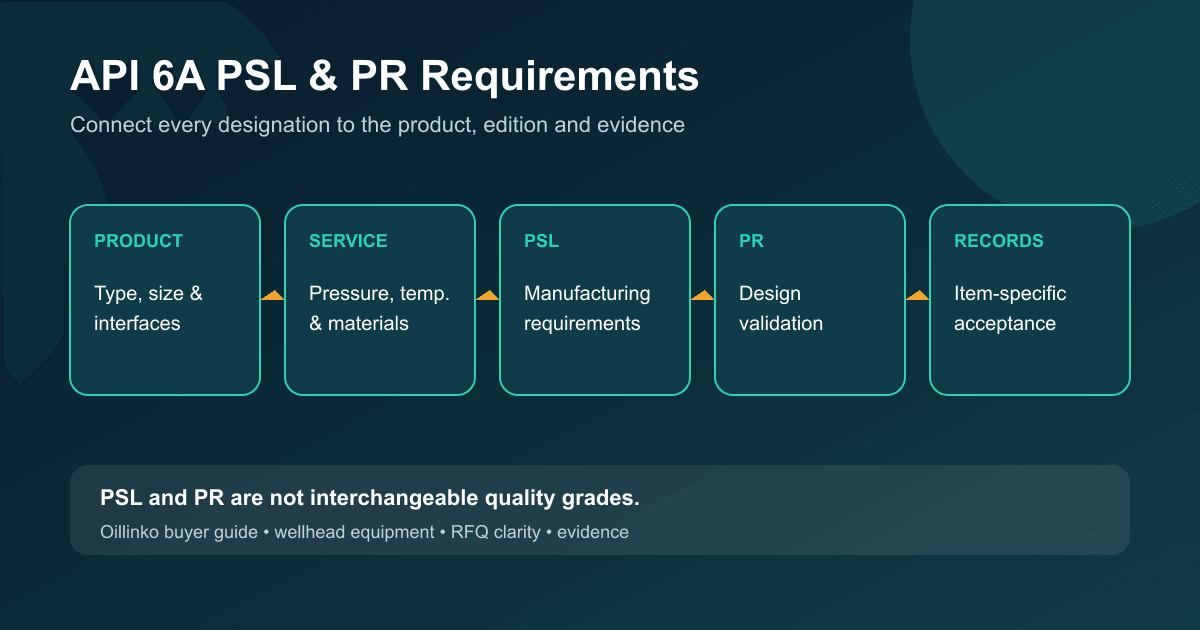
· 9 min read
API 6A PSL and PR Levels: A Wellhead Equipment Buyer’s Guide
Separate product specification requirements from design-validation evidence before ordering wellhead and tree equipment.
Read article →
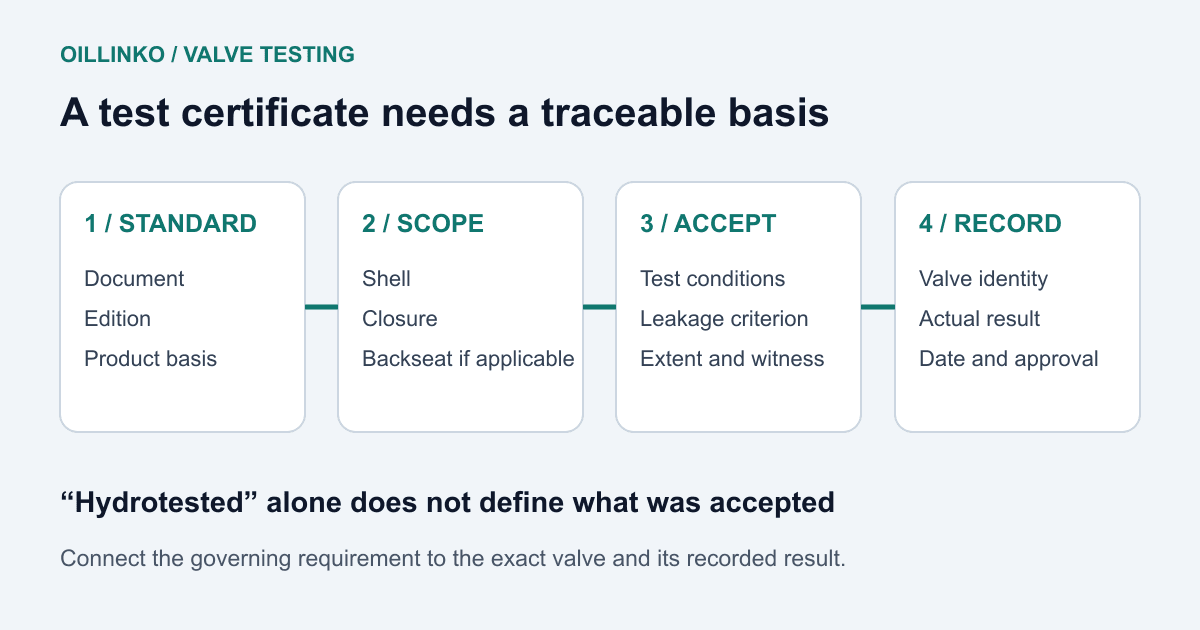
· 9 min read
API 598 vs ISO 5208 Valve Testing: A Buyer’s Guide
Define valve shell and closure testing, acceptance criteria and traceable reports before ordering.
Read article →
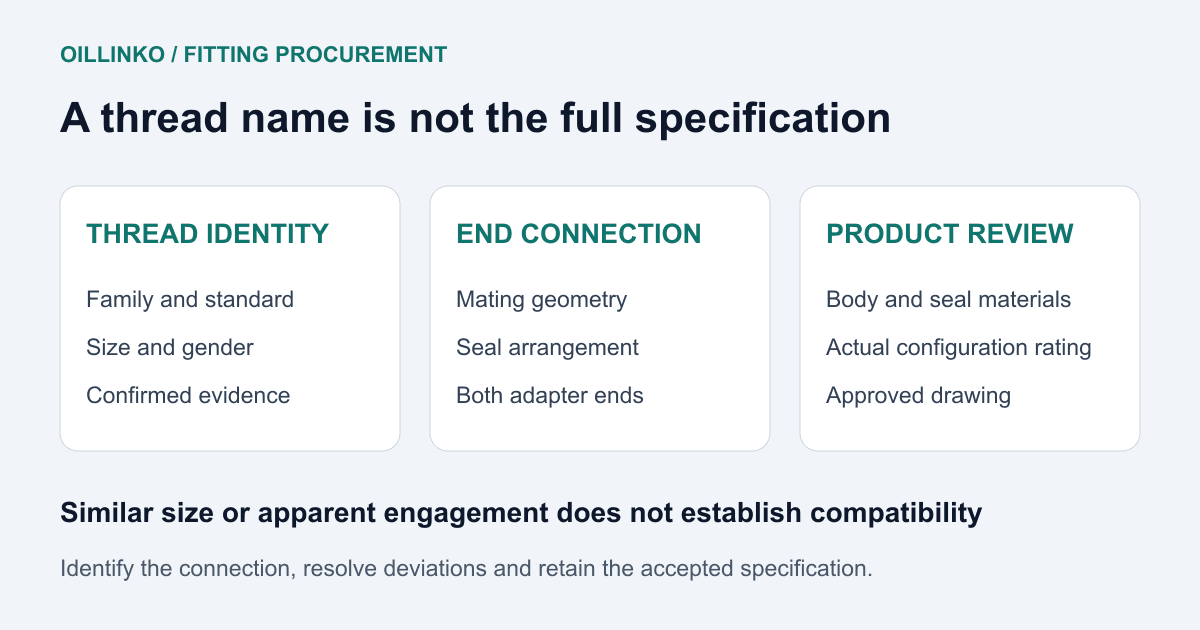
· 8 min read
NPT vs BSPT vs BSPP: A Threaded Fitting Buyer’s Guide
Identify the thread family and complete sealing arrangement before ordering fittings or adapters.
Read article →
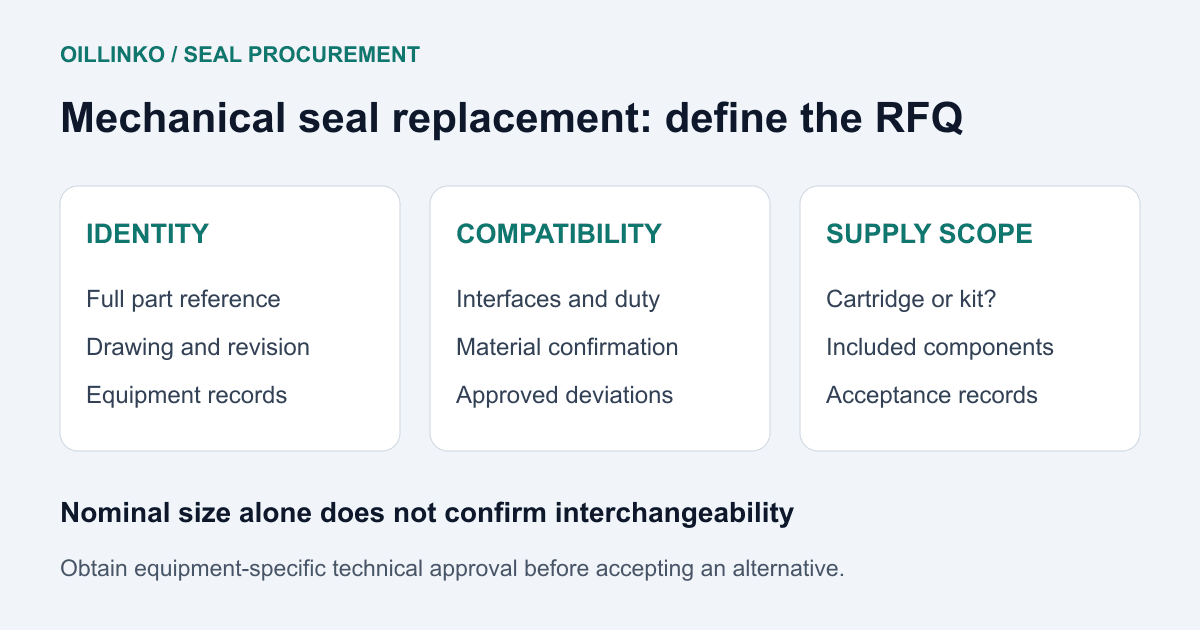
· 8 min read
Mechanical Seal Replacement: Identification and RFQ Guide
Identify the installed seal, define the assembly boundary and compare replacement offers.
Read article →
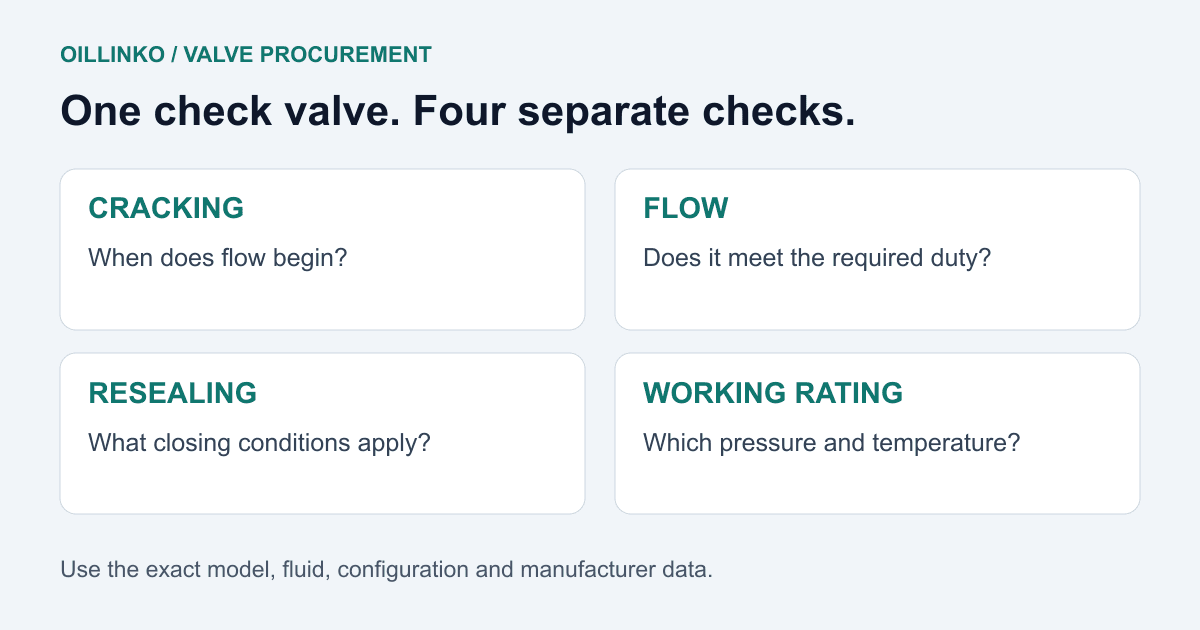
· 9 min read
Check Valve Cracking Pressure: A Buyer’s RFQ Guide
Separate opening threshold, required flow, resealing and working pressure before buying an inline check valve.
Read article →
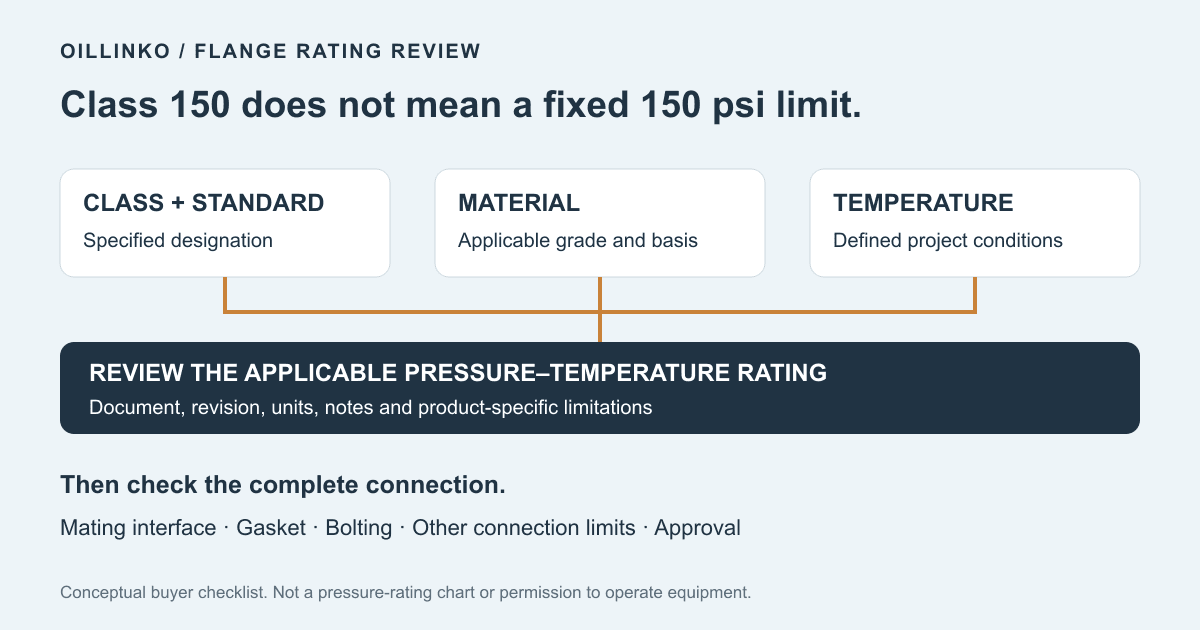
· 9 min read
ASME B16.5 Flange Pressure Classes: A Buyer’s Guide
Understand class designations, material-specific pressure-temperature ratings and complete-joint checks before buying flanges.
Read article →
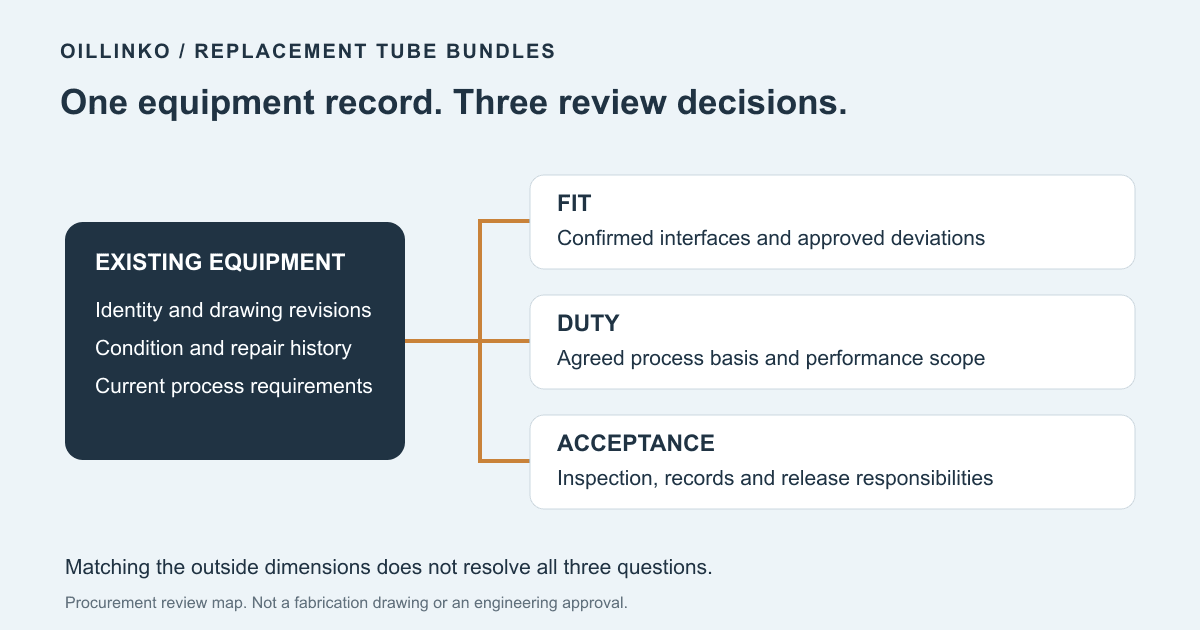
· 9 min read
Replacement Heat Exchanger Tube Bundles: RFQ Guide
Define replacement boundaries, drawing evidence and performance responsibilities before ordering a tube bundle.
Read article →
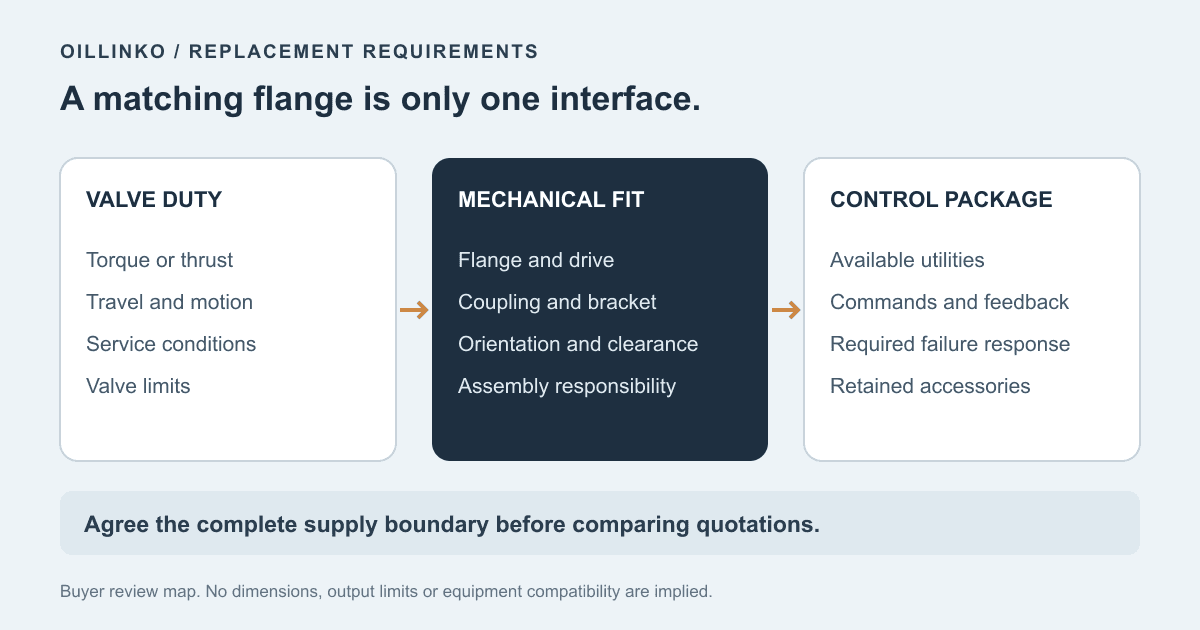
· 9 min read
Valve Actuator Replacement: RFQ & Compatibility Guide
Check valve duty, mounting, controls and failure response before accepting a replacement actuator.
Read article →
· 8 min read
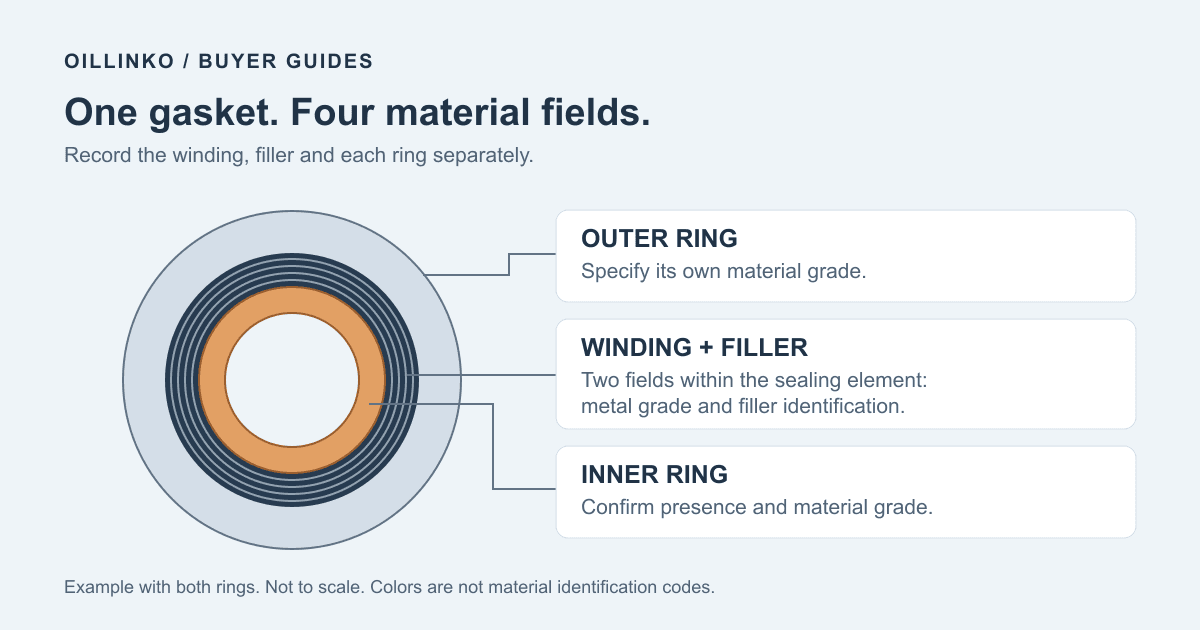
Spiral Wound Gasket Identification: A Buyer’s RFQ Guide
Turn gasket markings, ring details and flange records into a clear replacement requirement.
Read article →
· 9 min read
Special-Purpose Couplings (API 671) and Baseplate Design for Rotating Equipment
How to specify the right coupling type and baseplate for critical rotating equipment
Read article →

· 9 min read
API 675 Metering Pumps: Controlled-Volume Dosing Explained
What API 675 accuracy, linearity and repeatability actually require of a metering pump
Read article →

· 9 min read
Vertical Turbine Pumps for Tank Farms and Cooling Water Intakes (API 610 VS)
How the API 610 VS sub-types differ, and which ones actually get specified for tank farms and intakes
Read article →

· 9 min read
Pump Commissioning and Factory Acceptance Testing (FAT) Checklist
What to check at the factory, and what changes once the pump is on site
Read article →
· 9 min read
Reading a Pump Curve: Head, Flow, NPSH and Best Efficiency Point Explained
How to read a vendor's pump curve before you sign off on a quote
Read article →
· 9 min read
API 674 & API 676: Reciprocating and Rotary Positive Displacement Pumps
When to specify a positive displacement pump instead of centrifugal, and which standard applies
Read article →
· 9 min read
API 682 Mechanical Seal Piping Plans Explained (Plans 11, 23, 32, 52, 53)
What Plan 11, 23, 32, 52 and 53 actually do, and how to pick the right one
Read article →
· 9 min read
API 610 Pump Types & Classes Explained (OH, BB, VS)
How to read an API 610 pump type designation before you specify one
Read article →

· 6 min read
Gaskets & Sealing Products Explained: Spiral Wound, RTJ & Kammprofile
Choosing the right gasket type for the flange class and service
Read article →
· 7 min read
Pressure Vessels, Tanks & Heat Exchangers: The Codes That Govern Them
ASME Section VIII, API 650/620 and TEMA, explained for buyers
Read article →
· 8 min read
Valves & Actuation for Oil and Gas: Types, Standards and Actuation
Gate, ball, check and control valves — and how to choose the actuator
Read article →
· 7 min read
Wellhead & Christmas Tree Equipment Explained (API 6A)
How wellhead pressure and material classes are set, in plain terms
Read article →
· 6 min read
Pipeline Fittings & Schedules
Elbows, tees, reducers and how schedules work
Read article →
· 8 min read
Flanges, Gaskets & Bolting
How flanged connections hold, and how to spec them
Read article →