
Pressure Vessels, Tanks & Heat Exchangers
Diaphragm Seal Pressure Instrument RFQs: Define the Complete System
Keep process conditions, geometry and assembled measurement evidence connected.
By OillinkoPublished Updated 6 min read
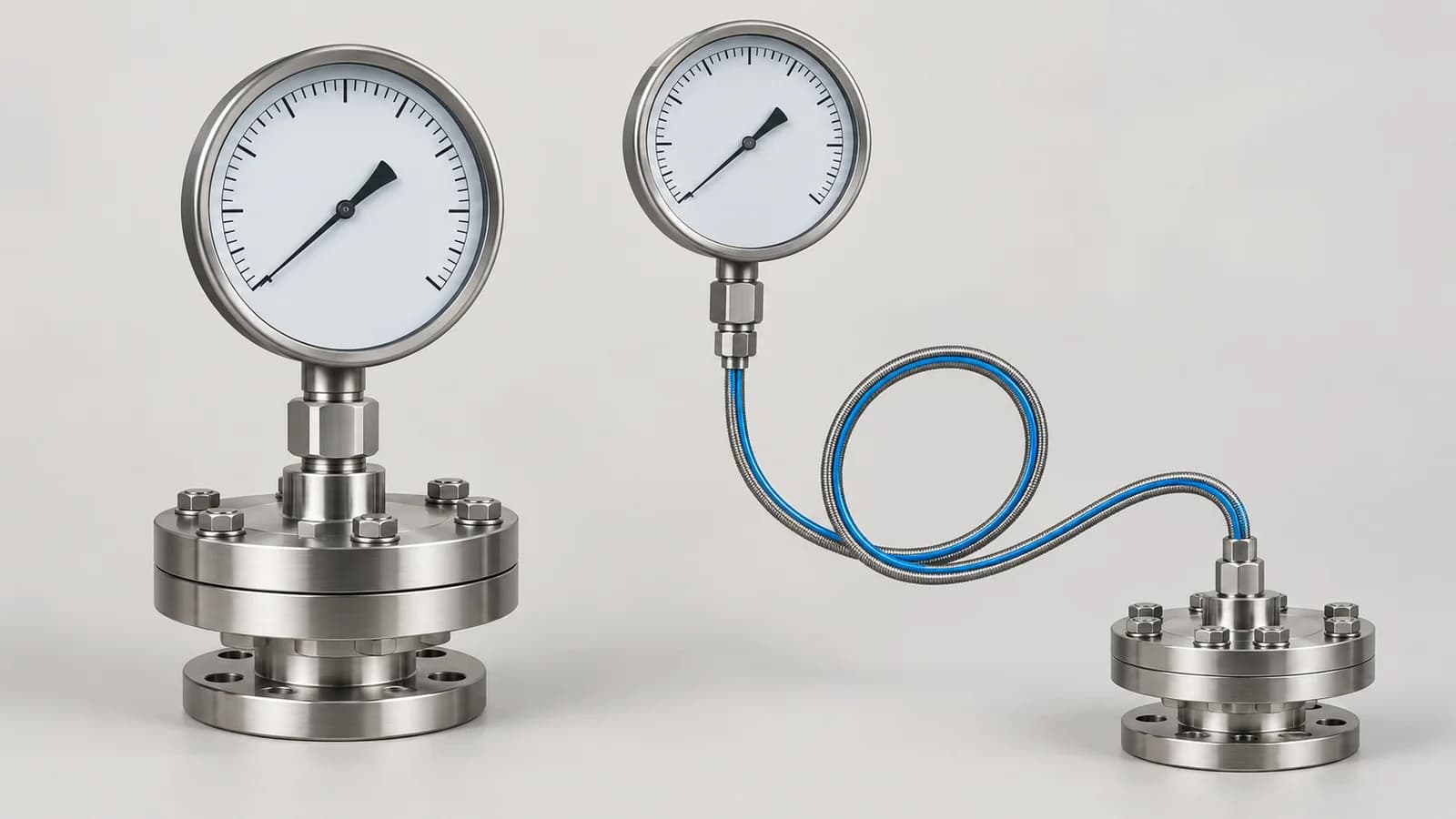
A diaphragm seal enquiry should specify a complete measuring system: the process connection and diaphragm seal, the filled connection between components, and the pressure instrument. Ordering a seal by flange size while leaving the gauge, fill fluid or installation geometry undefined can produce quotations for different assemblies. Start by identifying the measurement duty and supply boundary, then ask each bidder to document the exact combination offered.
This guide helps buyers prepare a new or replacement system enquiry. It does not prescribe assembly, filling, installation or instrument adjustment. A diaphragm seal for pressure measurement is also different from a rotating machine's mechanical shaft seal. The relevant question is how the proposed pressure assembly will meet the approved process and measurement requirements, with unresolved inputs and exclusions kept visible for engineering review.
Put one assembly on the enquiry schedule
WIKA's diaphragm seal technical information, IN 00.06, May 2022 describes separation of the pressure instrument from the process by a flexible diaphragm and transmission of pressure through system fill fluid. It identifies the seal, mounting arrangement and instrument as a connected system. Use that principle to request one assembly reference rather than assume that separately selected components will provide the required measuring performance.
State whether the supply includes a pressure gauge, transmitter or switch, and whether the whole assembly is new or an existing component is proposed for reuse. Give the tag, complete installed references and available drawings for a replacement. Ask the bidder to identify retained components explicitly and explain the proposed verification boundary. A photograph can support identification, but it does not establish internal materials, filling history or compatibility.
Describe the conditions at both ends
Provide normal operating, minimum and maximum process conditions, together with relevant design or upset cases from approved documents. Identify the medium and any known solids, crystallization, viscosity or cleaning requirements. Mark missing values as missing. A trade name for a fluid, or a familiar description such as corrosive service, should lead to a request for further information rather than an unsupported assumption about the required diaphragm material.
Specify ambient conditions at the instrument as well as process conditions at the seal. Describe where temperature exposure changes along the intended arrangement and identify vacuum service where applicable. State the required measuring range, units, pressure reference and the useful operating region. Keep mechanical pressure containment requirements separate from measurement accuracy. A connection rating or a dial range alone does not demonstrate that the complete system is suitable throughout the stated duty.
Identify the process interface and wetted scope
For a flanged connection, record the standard, size, rating designation, facing and relevant dimensions. For a threaded arrangement, retain the full thread designation and mating details; the NPT, BSPT and BSPP interface guide explains why a nominal inch size is insufficient. Include nozzle geometry, insulation and available space where these affect the proposed seal. Ask a replacement drawing to show any change from the installed interface.
Request a material schedule distinguishing the diaphragm and other process-wetted parts from external supports and nonwetted housings. Include project restrictions on coatings, gaskets and cleaning where applicable. Keep the proposed fill fluid identified separately from process-wetted metal grades. Ask the bidder to confirm its selection against the supplied conditions and to state unresolved compatibility questions. A general material description should not conceal a change to one critical wetted component.
Show the mounting arrangement, including elevation
The manufacturer's flanged seal description illustrates direct connection, a cooling element and a flexible capillary as possible mounting arrangements. These are examples, not interchangeable accessories with universally identical performance. Describe the proposed arrangement on a controlled sketch, including the instrument location, connection route and mounting space. Ask the offer to identify supports, protective features and accessories included in the supply boundary.
WIKA's diaphragm seal FAQ explains that height difference between the seal and instrument affects pressure indication through the liquid column. Record both the size and direction of the elevation difference, rather than supplying only capillary length. Provide the intended route and identify any uncertainty in site dimensions. Ask the supplier to address the actual geometry in its system review; do not apply an improvised correction or assume a remote arrangement behaves like direct mounting.
Request performance for the connected system
IN 00.06 identifies capillary geometry, fill-fluid properties and temperature among the influences on response and indication. Request a documented assessment for the offered assembly and relevant operating cases. State the required response and permissible measurement performance through the responsible engineering specification. A bare instrument accuracy statement should not silently become a guarantee for every seal, capillary, temperature and elevation combination attached to it.
Keep the assessment reviewable. Ask which conditions were considered, what assembly configuration the evidence describes, and whether any requested case remains outside the offered scope. Identify the party responsible for approving the result. If the bidder needs additional data, resolve it before technical acceptance. An offer can be commercially complete while its measuring performance remains conditional; recording that distinction prevents a quotation from being mistaken for an approved design.
Compare the same supply and documentation boundary
Build a comparison schedule that links each requirement to the offered reference and a supporting document. Useful rows include the instrument function and range, process interface, wetted materials, fill-fluid identification, mounting arrangement, elevation basis, required performance review and calibration scope. Add a separate status for each unresolved input or deviation. This makes a complete assembly offer distinguishable from one that supplies only a seal or excludes essential accessories.
Request the controlled datasheet, dimensional drawing, assembly identification, required material records and stated manufacturing origin. Origin means the country of manufacture, not the sales office or dispatch location. Define whether calibration evidence covers the connected assembly or the instrument alone. The pressure gauge calibration certificate guide addresses interpretation of those records; it complements system selection rather than replacing the application review.
Preserve the accepted configuration through handover
At receiving, match the supplied assembly references and documentation with the accepted offer revision. Record discrepancies, missing documents and any proposed substitution for review before closing the order. Keep the intended configuration available to the personnel responsible for installation and commissioning. A later change to capillary routing, instrument position or retained components should be referred back to the appropriate technical reviewer, rather than treated as an administrative adjustment.
Prepare the instrument schedule, process cases, interface drawing, mounting sketch and required evidence before requesting quotations. Explore the Oillinko equipment and service catalogue and use the pressure gauge and transmitter enquiry page for manual review and routing. Availability, suitability, manufacturing origin and commercial terms are confirmed for each enquiry; this guide does not establish stock, supplier authorization or approval of a particular assembly.