
Valves & Actuation
Specify the valve and its actuation.
Read moreRead less about this category
Choose the valve for its required function
Oil and gas valve selection starts with the function the valve must perform. Isolation, throttling, non-return and pressure protection are different duties, and the appropriate construction depends on the process and project requirements. This category covers the valves and actuation subjects already represented in the Oillinko catalogue. It helps buyers turn a general description into an enquiry that a supplier can assess. The valves and actuation article introduces common equipment families, while this guide focuses on the information needed to compare complete offers.
An isolation valve is usually evaluated for its ability to open and close under stated conditions, whereas a control valve must also address behavior across a range of flows and pressure differences. A check valve responds to the flow conditions of the system, and a pressure protection device requires an approved protection basis. These distinctions should appear in the enquiry. Avoid selecting a product simply because another installation uses the same nominal size. Provide the intended duty and allow the responsible engineer and supplier to establish which product construction is appropriate.
Establish service conditions and materials
Identify the fluid, composition, pressure and temperature conditions, including any solids or other characteristics relevant to the service. Separate design conditions from normal operation and describe the expected range of differential pressure. A material description for the body alone is incomplete when trim, seats, seals and packing contact the process or affect containment. Existing material specifications and accepted equipment datasheets are useful references. If an equivalent is proposed, require the supplier to identify the differences and explain the basis for the proposed material selection rather than merely stating chemical compatibility.
The operating environment also matters. External corrosion exposure, ambient temperature, accessibility and electrical area classification can affect the assembled valve package. State any project requirements for coatings, emissions performance, fire testing or product approvals, and ask for evidence tied to the offered model and construction. A test certificate for another product does not establish that all variants share its qualification. Where the specification is incomplete, record the question for the project team. The enquiry should make uncertainties visible so that they can be resolved before an order is placed.
Confirm mechanical fit and installation boundaries
Connection size, pressure class and facing need to match the project piping system. Include the applicable connection standard, end preparation and dimensional constraints. Face-to-face dimensions and access around the valve can be especially important for replacement work. The piping, flanges and fittings guide explains these adjacent interfaces. A valve that is suitable for the process may still require installation changes, so ask for the proposed dimensions and mounting arrangement before treating the quotation as a direct replacement for an existing assembly.
Define which accessories and installation materials are included. Mating flanges, bolts, gaskets, supports and extension stems may be separate line items. For buried, insulated or difficult-access installations, provide the relevant arrangement drawings and operating access requirements. If the supplier proposes a complete assembly, ask for a drawing that shows the supply boundary. A buyer comparing a bare valve with a packaged valve can otherwise mistake missing scope for a price advantage. Keep the technical and commercial documents aligned so each included item has a clear description.
Specify actuation and control interfaces
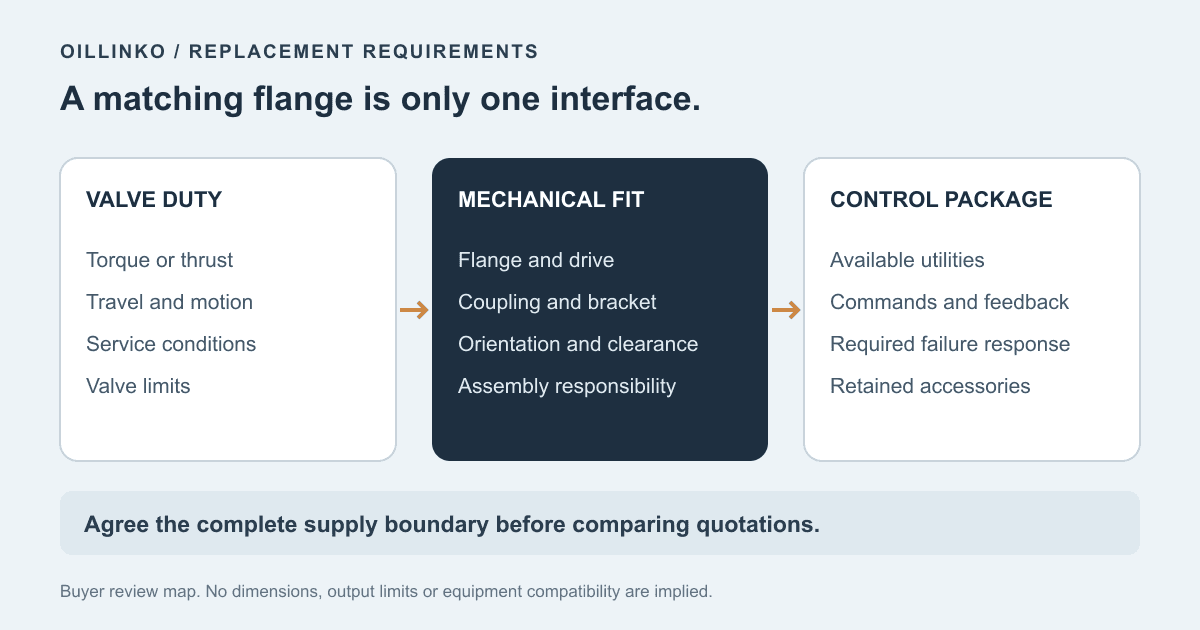
An actuator must be selected for the valve duty and required operating behavior, with the sizing basis confirmed by the responsible supplier. State the available pneumatic, hydraulic or electrical supply and the required response to loss of power or signal. Define whether operation is local, remote or both. A mounting interface is only part of compatibility: the complete assembly also needs suitable output, travel and controls. ISO 5211 addresses part-turn actuator attachments; its scope should not be interpreted as proof that any actuator using that attachment can operate every matching valve.
Identify feedback and control accessories such as position indication, switches, solenoid valves and positioners where required. Include signal types, communications requirements, cable entry information and any environmental or area classification requirements. Ask whether the assembled package will be checked before dispatch and what records will be provided. If the actuator is being purchased for an installed valve, obtain the valve manufacturer's required operating data. The valve actuator replacement RFQ guide connects that data to the mounting, utilities and control package. Inferring actuator suitability from a manual handwheel size or a catalogue photograph can leave the most important sizing questions unanswered.
Agree testing and the final enquiry
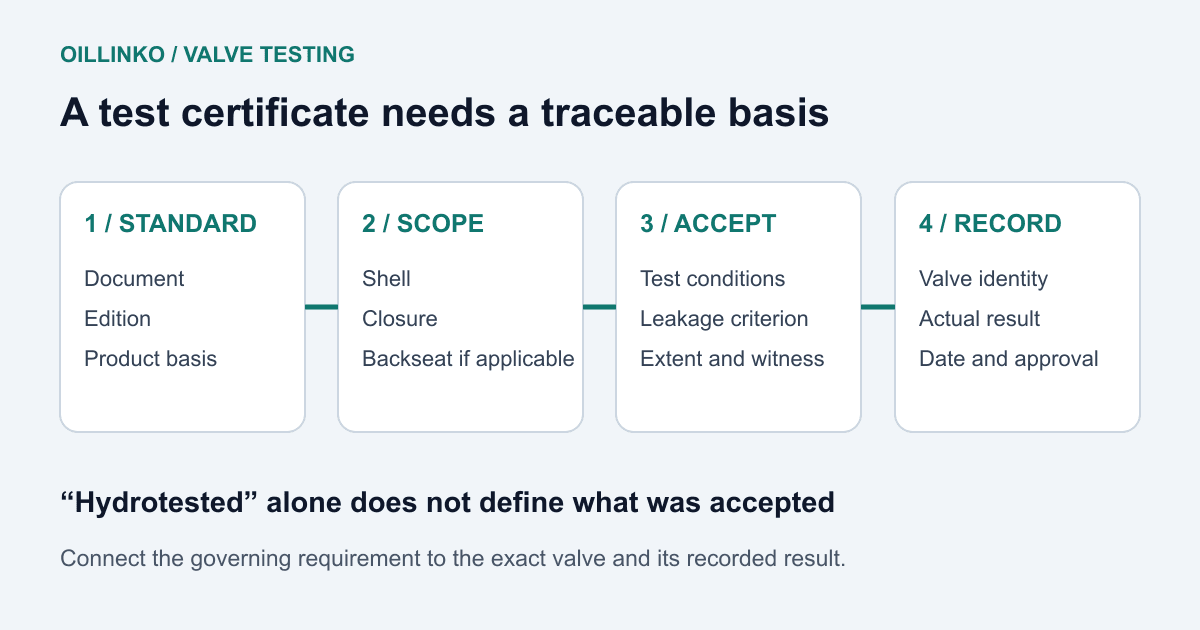
Valve inspection can address materials, dimensions, pressure containment, seat leakage and functional behavior, depending on the product and contract. State which tests and acceptance standards apply, the required records and any witness points. A broad request for a test certificate may leave the actual test scope undefined. The inspection and testing guide explains how to describe the evidence required. Test results should identify the actual supplied item or batch as appropriate, and any deviations should be resolved through the project's acceptance process rather than hidden in a general conformity statement.
For the final enquiry, include quantity, full product description, supporting datasheets, delivery destination and required date. Distinguish mandatory features from preferences and state whether alternatives are permitted. For replacements, attach the installed equipment identification and list any dimensions or operating interfaces that cannot change. Use the valves and actuation catalogue to submit the requirement to Oillinko. Read the supplier selection and RFQ guide when comparing complete offers, so product compliance, documentation, lead time and commercial scope are evaluated together.
Specify check valve opening and closing requirements
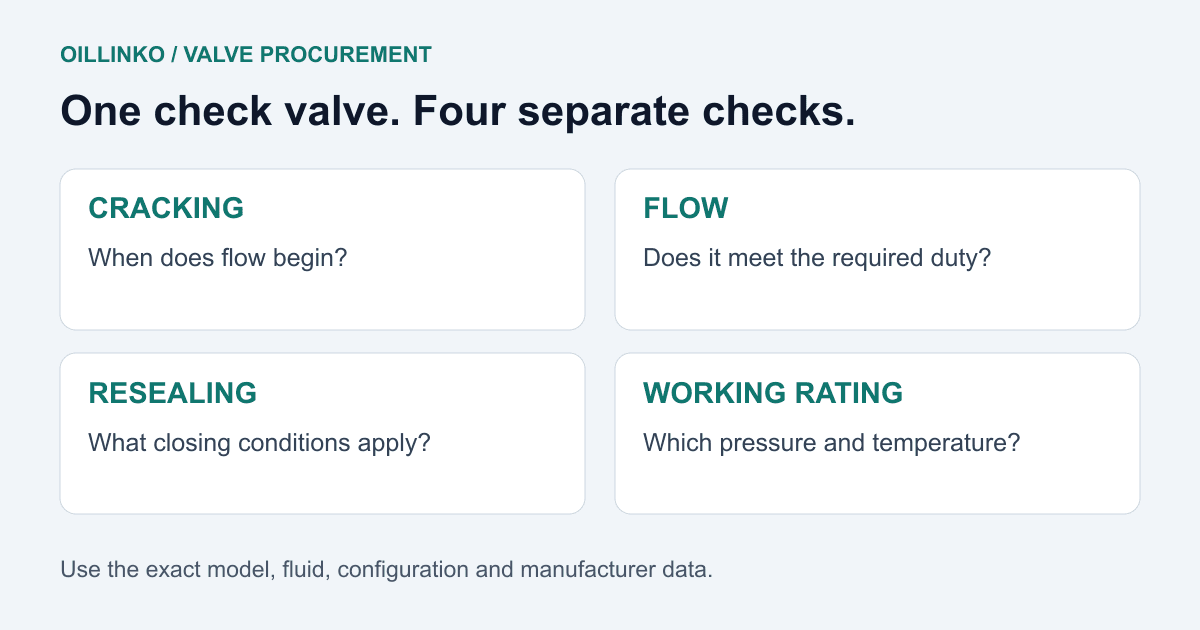
The check valve cracking pressure guide separates the first indication of flow from capacity, resealing and working pressure. Read it when an inline check valve enquiry needs a clearer spring specification, documented flow basis or defined reverse-leakage acceptance requirement before supplier offers can be compared.
Articles in Valves & Actuation
· 9 min read
API 598 vs ISO 5208 Valve Testing: A Buyer’s Guide
Define valve shell and closure testing, acceptance criteria and traceable reports before ordering.
Read article →
· 9 min read
Check Valve Cracking Pressure: A Buyer’s RFQ Guide
Separate opening threshold, required flow, resealing and working pressure before buying an inline check valve.
Read article →
· 9 min read
Valve Actuator Replacement: RFQ & Compatibility Guide
Check valve duty, mounting, controls and failure response before accepting a replacement actuator.
Read article →
· 8 min read
Valves & Actuation for Oil and Gas: Types, Standards and Actuation
Gate, ball, check and control valves — and how to choose the actuator
Read article →