
Oil & Gas Services
Scope the work before mobilization.
Read moreRead less about this category
Buy a defined result rather than a broad service label
Oil and gas services are most usefully described by the work to be performed, the asset involved and the evidence needed at completion. Inspection, calibration, repair, pipeline intervention and engineering support each involve different responsibilities and qualifications. This category explains how to frame those requirements using the service subjects already listed in the Oillinko catalogue. A service enquiry submitted to Oillinko is reviewed for coordination with suitable providers; the guide does not imply that Oillinko owns specialist field equipment or holds every qualification required to execute the work directly.
The distinction between equipment supply and a service package matters from the start. A rental instrument may arrive without an operator, a repair quotation may exclude removal from the plant, and a testing offer may assume that the asset is already prepared for inspection. State the desired outcome in practical terms, such as an agreed inspection report or an assessed repair recommendation. Then describe what must be supplied, what must be done and what the client will provide. This creates a common basis for comparing offers that would otherwise hide different assumptions behind the same service title.
Establish the asset, site and work boundaries
Identify equipment tags, locations, quantities, access conditions and available records. A provider planning factory inspection needs different information from a crew mobilizing to an offshore installation or an operating plant. Explain whether the work occurs in a workshop, a fabrication facility or at the installed asset. Relevant drawings, previous findings and maintenance history can reduce uncertainty about the scope. If the condition is unknown, consider a defined initial assessment with a subsequent repair proposal rather than requiring a fixed repair price based on an incomplete description.
Site responsibilities should identify who prepares the equipment, arranges access, provides utilities and controls the work area. Lifting, scaffolding, isolation and waste handling may be necessary project interfaces, but they should not be assumed to fall within every specialist service quotation. For activities involving hazardous energy, the responsible operator must define the applicable arrangements and approvals. The HSE guide to safe isolation of plant and equipment provides a recognized framework for understanding why isolation planning matters. It is UK guidance, and local requirements and approved site procedures still govern the actual work.
Distinguish intervention from inspection
The pipeline intervention category addresses enquiries involving hot tapping and line stopping, where the equipment configuration and the condition of an operating pipeline are central to feasibility. These services should be assessed by competent specialists using the specific line data and approved engineering basis. A generic equipment description is insufficient for authorizing field execution. The buyer's role is to provide a clear requirement and obtain a documented scope, responsibility matrix and technical proposal that can be reviewed by the operator before any work is committed.
The inspection and maintenance category focuses on evaluating condition, checking conformity, calibrating instruments and defining repair or maintenance work. An inspection does not necessarily include engineering acceptance of the asset, and an instrument calibration does not necessarily include adjustment or repair. Define the expected output for each activity. If a report is intended to support a regulatory, insurance or client requirement, tell the provider which requirement applies and what competence or accreditation evidence is needed for that specific scope.
Set deliverables and acceptance criteria
An effective service specification describes what constitutes completion. Deliverables may include reports, measured data, marked drawings, calibration results, repair records or a documented list of unresolved findings. Specify the required format and the asset identification that must appear on each record. If the client must approve intermediate results before work continues, identify the review point and expected response time. This prevents a provider from assuming that completing a site visit is equivalent to completing the technical and documentary obligations of the order.
Acceptance criteria need an agreed basis. The provider should know the method, coverage, reference documents and applicable limits established by the responsible engineering authority. Where the appropriate method has not yet been selected, ask for a technical recommendation and identify who will approve it. Avoid writing a specification that guarantees a favorable result, such as requiring equipment to pass an inspection regardless of condition. The purchased service should produce credible evidence and clearly reported findings, including limitations or areas that could not be assessed.
Coordinate schedule and commercial assumptions
Service pricing can depend on mobilization, personnel days, equipment rental, consumables, access and standby. Ask suppliers to distinguish fixed scope from provisional work and explain what triggers additional charges. A short site activity may still require travel, preparation and reporting time. Identify the planned work window, readiness assumptions and process for authorizing variations. For multi-discipline work, establish who coordinates the interfaces between providers and who owns the final integrated deliverable. These details are especially important when a narrow shutdown window limits the opportunity to resolve missing information on site.
The specialist services catalogue also contains engineering, environmental, digital and other project support subjects. Those enquiries should follow the same discipline of specifying inputs, deliverables, responsibilities and acceptance. A digital assignment may need data access and software interfaces instead of field access, while an environmental assignment may need sampling locations and reporting criteria. Treat the catalogue as a way to organize the requirement, and require project-specific confirmation of the provider's competence, availability and proposed method before treating a service as contracted.
Prepare the enquiry for review
Send a concise scope supported by the available technical documents, requested dates and site information. Mark confidential information appropriately and identify unresolved questions that the provider should address. If equipment or replacement parts may be needed, distinguish confirmed purchase items from provisional recommendations following inspection. The supplier selection and RFQ guide explains how to compare the resulting proposals. Keeping the technical scope and commercial assumptions together helps Oillinko coordinate an enquiry that can be reviewed, priced and accepted without relying on an undefined promise of complete service.
Explore oil & gas services topics
Equipment Maintenance & Repair
Scope industrial equipment maintenance and repair enquiries using condition reports, OEM identification, work boundaries and acceptance requirements.
4 articles · Explore guide →
Pipeline Intervention
Understand hot tapping and line stopping scope, equipment interfaces and project information needed for specialist pipeline enquiries.
1 articles · Explore guide →
Articles in Oil & Gas Services
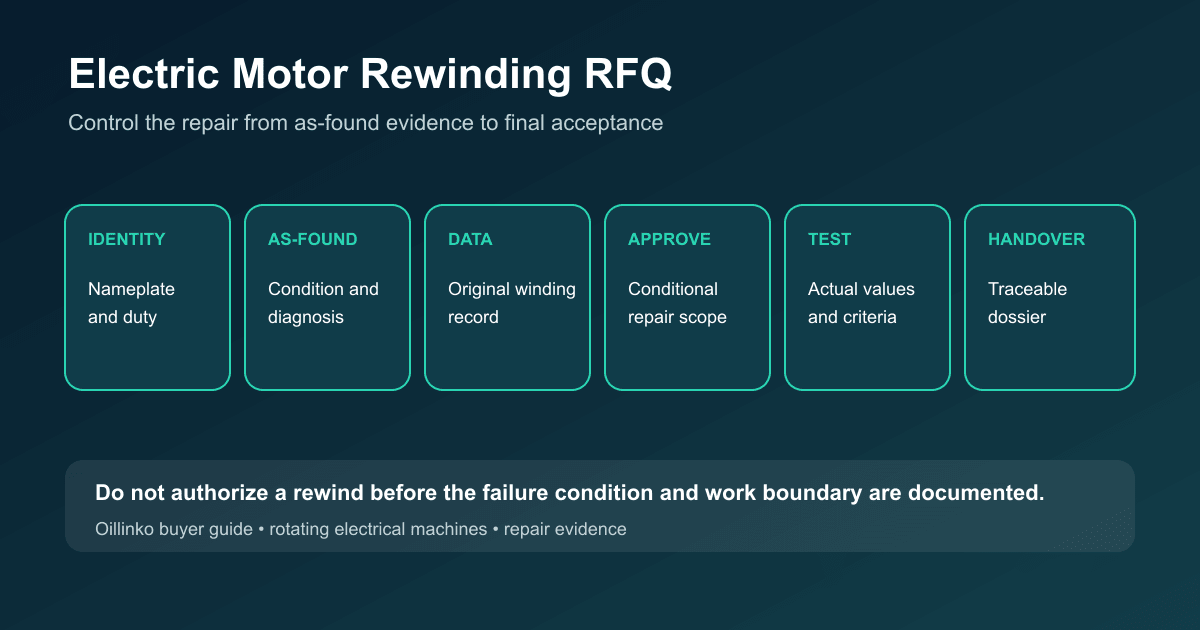
· 9 min read
Electric Motor Rewinding RFQ: Tests, Data and Acceptance Records
Define the as-found evidence, authorized repair boundary, winding data, final tests and handover records.
Read article →
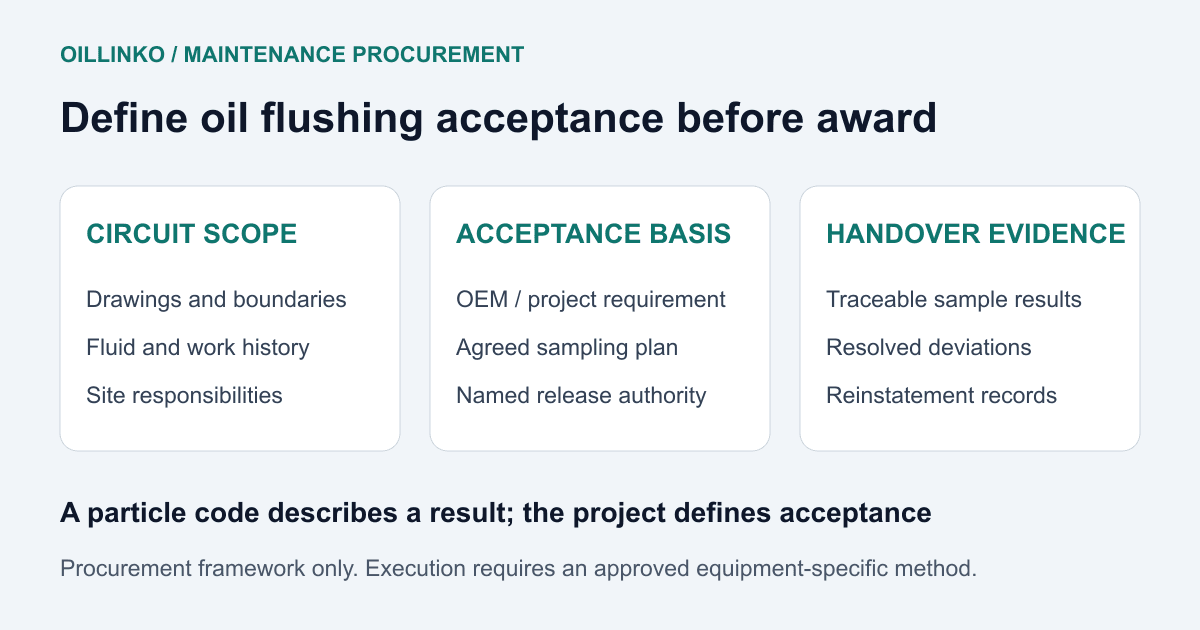
· 8 min read
Oil Flushing Service RFQ: Cleanliness Targets and Acceptance
Define oil flushing boundaries, cleanliness requirements, sampling evidence and handover responsibilities.
Read article →
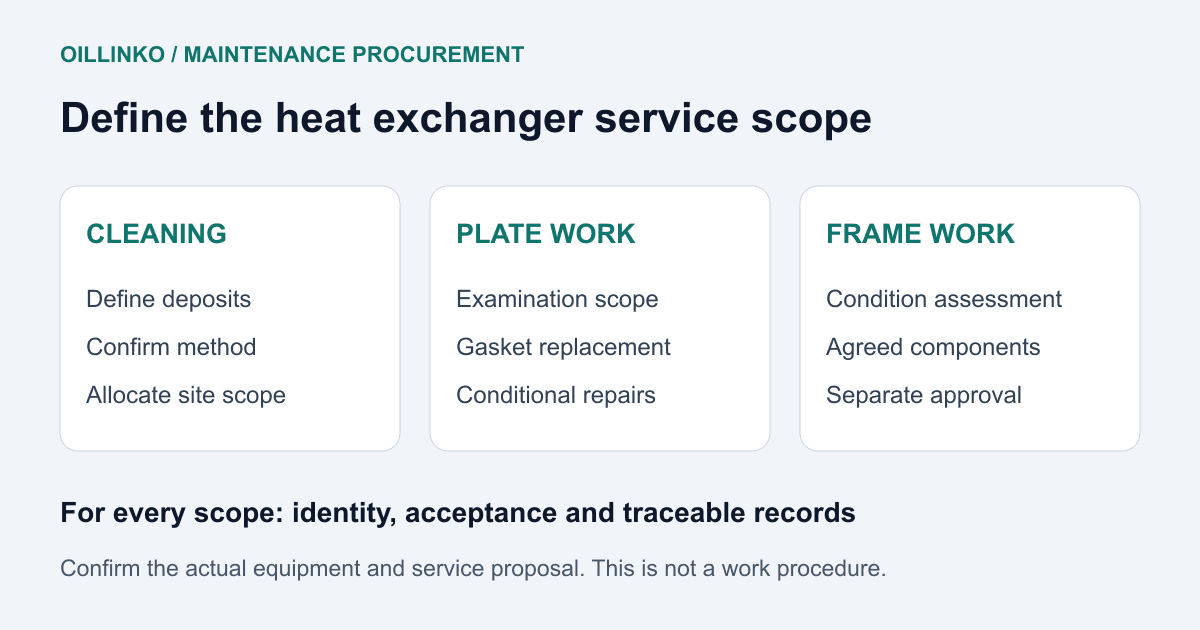
· 9 min read
Plate Heat Exchanger Cleaning vs Reconditioning: RFQ Guide
Compare cleaning, plate reconditioning and frame repair through a clearly defined service scope.
Read article →
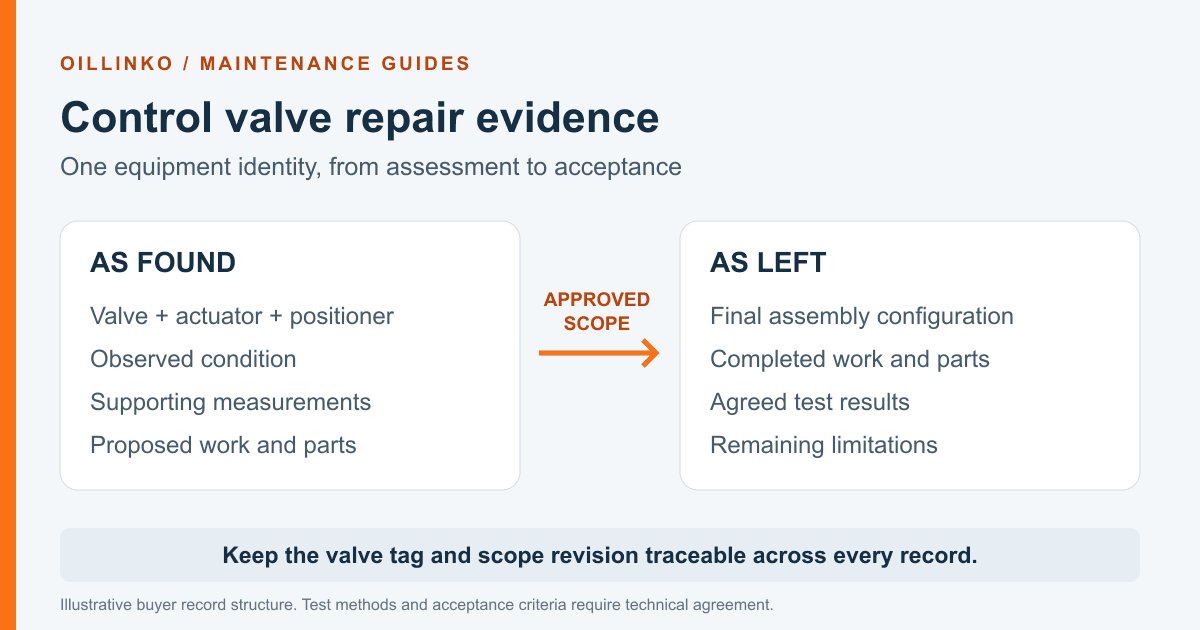
· 8 min read
Control Valve Repair RFQs: Scope, Tests and Reports
Request evidence about the valve, actuator and positioner before approving an overhaul quotation.
Read article →

· 7 min read
Hot Tapping & Line Stopping Explained (API RP 2201)
Modify live pipelines without shutting them down
Read article →