A control valve repair quotation should explain which problem the work is intended to resolve and how the result will be demonstrated. An offer for an overhaul can cover very different tasks: inspection of the valve internals, actuator work, positioner checks, replacement parts or testing. A buyer needs those boundaries before comparing prices. Otherwise, a seemingly complete offer may leave the component associated with the reported fault outside the repair scope.
This guide covers the commercial and technical information to request when a process control valve needs assessment or repair. It helps procurement teams assemble an enquiry for qualified review. It does not provide disassembly instructions or authorize work on an installed valve. The equipment manufacturer's instructions, the operator's approved arrangements and the applicable project requirements remain the basis for deciding how the work can be performed.
Identify the whole control valve assembly
Record the valve body, actuator and positioner separately. Include manufacturer, model, serial number and the plant tag, with readable nameplate photographs where available. Attach the current valve datasheet and record any known modifications. An old purchase order may describe the original assembly while the installed equipment has since received a different actuator or controller. Mark an uncertain configuration as unconfirmed rather than assuming the original record is still correct.
Describe the process fluid and the operating conditions relevant to the complaint. Include the specified materials, connection details and control requirements so the reviewer can understand what must be preserved. The valves and actuation equipment guide provides background on these interfaces. Identify accessories supplied with the assembly and those staying on site. A workshop should not have to infer whether a missing regulator, solenoid or feedback device is excluded, unavailable or simply packed in a separate box.
Describe symptoms and preserve as-found evidence
Write down what was observed, when it happened and under which conditions. For example, distinguish a position indication that fluctuates from a measured process variable that oscillates. Attach available trend plots, alarm history and earlier service reports, with timestamps and tag references. Those observations help the technical reviewer frame an assessment; they do not by themselves establish that the valve internals require replacement. Avoid turning an operator's reported symptom into a confirmed failure mechanism on the purchase order.
Emerson's control valve diagnostics overview describes information about supply pressure, air leakage, friction, dead band and calibration. The available measurements depend on the installed equipment and diagnostic capability. Ask which records can be provided for your assembly and how they will be interpreted. Agree what as-found evidence should be captured before adjustment or repair changes its condition. If a requested test is unsuitable for the received condition, require the limitation to be explained in the assessment.
Separate assessment from the repair price
When internal condition is unknown, request a priced assessment stage with defined deliverables. These can include component identification, inspection findings, photographs, measurements and a proposed repair scope. State the permitted extent of dismantling and who can approve additional work. Ask what happens if repair is declined: whether the assembly will be returned dismantled or reassembled, how loose parts will be identified and which charges remain payable under the quotation.
The subsequent proposal should connect each recommendation to a finding. Separate labor, replacement parts, specialist processes, testing and documentation instead of accepting a single unexplained overhaul figure. Identify provisional items and the event that makes their price firm. A commercial approval can then refer to an agreed scope revision. This also makes it easier to compare repair with a replacement assembly if the assessment finds that the proposed work is extensive or key parts cannot be obtained in time.
Review parts and configuration changes
Request a parts list that distinguishes items retained, repaired and replaced. Ask for the proposed part references, material identification and source, and require alternatives to be declared. Review any proposed change to trim, packing, actuator or positioner with the responsible engineer. A similar external appearance is not sufficient evidence of interchangeability. The proposal should explain what remains equivalent to the specified assembly and which characteristics need a new technical review.
Keep restoration and modification visible as separate decisions. If a workshop recommends a different trim arrangement or a new controller, request the reason, supporting selection information and effect on the agreed scope. Confirm which drawings, settings records and spare-parts references will be updated. Where material inspection documents are required, define them for the relevant supplied parts using the EN 10204 documentation guide. A generic workshop certificate should not silently replace the specified material evidence.
Agree tests and acceptance before authorizing repair
Ask the repairer to identify the proposed examinations and what each one demonstrates. Movement and control response, seat leakage and pressure-boundary integrity are different acceptance questions. A statement that the valve was tested is incomplete without the scope, conditions, measured result and acceptance criterion. Require the responsible reviewer to select the appropriate tests for the actual design and work performed; do not insert a universal pressure or leakage limit into every repair enquiry.
IEC 60534-4:2021 addresses inspection and routine testing of control valves within its stated scope. Its actuator requirements apply only to pneumatic actuators, and it has service exclusions. Naming this standard does not automatically establish a complete acceptance basis for every repaired assembly. Ask the technical reviewer which requirements and edition apply, which additional project conditions are needed and how the report will document conformance. Arrange any witness or review points before the workshop schedules testing.
Connect workshop work with the site schedule
Identify who handles removal, preparation for shipment, transport, reinstallation and return-to-service checks. Confirm the receiving workshop's requirements for equipment previously exposed to the process fluid. HSE's safe isolation guidance for plant and equipment explains why intrusive maintenance requires planned controls; it is UK guidance, not a replacement for applicable local rules. A repair booking does not establish that the installed equipment is safe to disconnect or that a returned assembly is ready for plant operation.
Ask when the quoted turnaround starts and which dependencies can change it. Receipt at the workshop, completion of assessment, parts approval and availability of replacements may be different milestones. Give the required site return date, allowing for transport and the operator's acceptance activities. The third-party inspection guide helps define who reviews or witnesses the agreed work. Specify preservation, packing and storage instructions if reinstallation will be delayed.
Request a repair record the next buyer can use
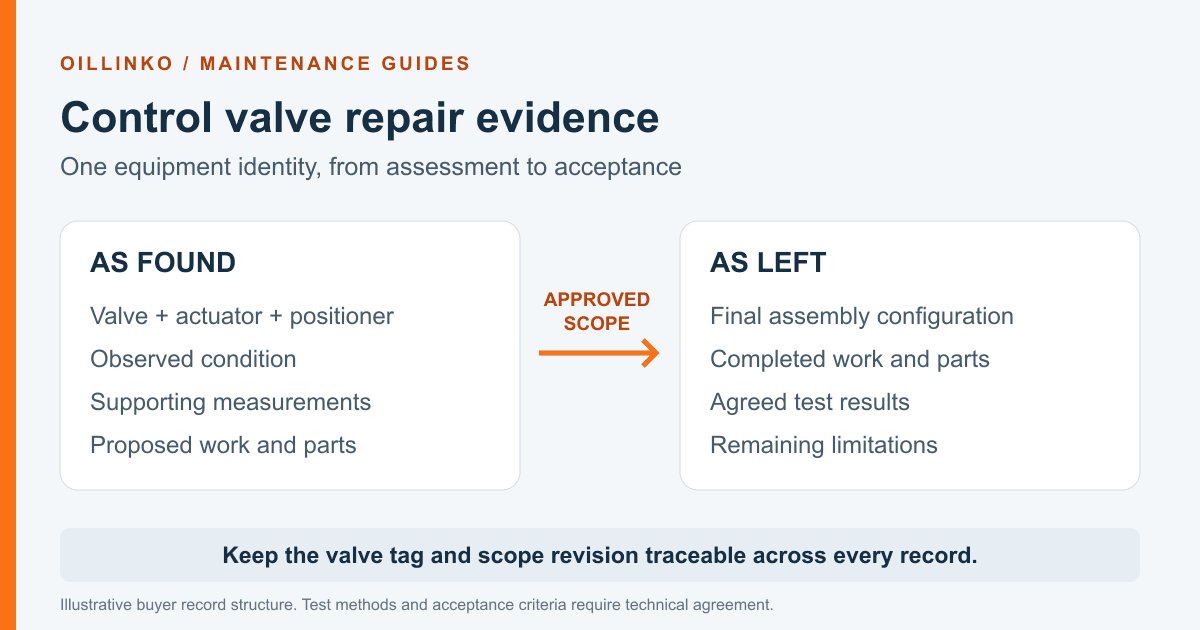
The final as-left report should identify the same asset as the as-found assessment and show what changed. Request the approved scope revision, installed parts, final configuration, test results and any outstanding limitations. Keep recommended future work separate from work actually completed. Ask the repairer to explain any difference between the accepted proposal and the final record before commercial closeout. These details make the next maintenance or spare-parts enquiry much more reliable than a brief label saying serviced.
To prepare a sourcing enquiry, combine the assembly identification, observed symptoms, available reports and expected deliverables with the required schedule. Use Oillinko's inspection, engineering and repair requirements page or submit the control valve repair brief. The enquiry reaches Oillinko for manual review and provider coordination. The actual provider, equipment coverage, qualifications, repair scope and commercial terms are confirmed for the requirement. This guide does not imply that Oillinko operates a repair workshop or holds manufacturer repair authorization.
Frequently asked questions
What should I send with a control valve repair enquiry?
Send the equipment tag, valve, actuator and positioner identification, current datasheet, observed symptoms, available diagnostic records, service conditions and required return date. Identify missing information and state whether you are ordering assessment or a defined repair.
Does a valve diagnostic report prove seat tightness?
Only if the report includes an appropriate seat-leakage examination with its stated method, conditions and acceptance criteria. A report showing travel or positioner performance alone does not establish seat-leakage acceptance.
Can the workshop replace obsolete parts without approval?
The purchase agreement should define that authority. Request the proposed part, configuration differences, technical justification and revised price before approving substitutions that change the agreed repair scope.