
Defining carbon-management and geothermal equipment purchasing boundaries
Which project objective should the equipment enquiry define?
Carbon management and geothermal development bring several purchasing disciplines together, but their objectives and evidence requirements differ. A capture package separates carbon dioxide from a defined source stream; conditioning prepares that product for a downstream destination. Methane monitoring establishes observations for a specified measurement programme. Geothermal equipment connects a particular subsurface resource to a heat or power application. Identify the project objective, engineering stage and package owner before combining these requirements into one enquiry. A broad energy-transition label does not define a common equipment specification.
Use an approved process description and boundary diagram to explain the proposed purchase. Identify the source or resource, expected output, available infrastructure and receiving system. State whether the request seeks equipment supply, a feasibility proposal, rental instruments or a specialist measurement assignment. Separate established project data from assumptions that still need investigation. The purchaser should identify who will resolve those assumptions and when. This allows a supplier to present a qualified scope rather than interpret incomplete information as permission to design every part of the project.
What source-stream information belongs in a capture-package RFQ?
Define the emitter stream at the capture-package inlet using the project's composition, flow, temperature and pressure data, with their normal ranges and measurement basis. Identify contaminants, moisture and any upstream treatment included by others. State the required captured-product quality and capture objective together with the conditions under which performance will be assessed. Solvent, solid-sorbent and membrane processes represent different separation approaches; a technology name alone does not establish a package's compatibility with the actual emitter stream or its utility demand.
Show the utilities available at the battery limits, including the project's heat, cooling, electricity and water constraints. Identify space and access limitations and interfaces with the existing process so quotations include the same integration duties. Ask each proposal to distinguish the separation equipment, auxiliary systems, upstream preparation and downstream conditioning. Record what is excluded and which inputs must be confirmed before a firm design or price. For a preliminary enquiry, request stated assumptions and the information needed to refine them instead of presenting an early estimate as an accepted performance guarantee.
How should CO2 conditioning, transport and injection interfaces be separated?
A carbon dioxide conditioning enquiry should identify the stream composition, expected phase and required delivery condition at its outlet. Specify the downstream quality requirements, including the project's water and impurity limits, through the controlled design basis. Identify the capture-system outlet and transport or injection-system inlet as separate interfaces. Do not transfer a pressure or purity figure from an unrelated public example into the RFQ. The required condition depends on the selected destination, network or site design and the responsible engineering review.
Divide drying, compression, cooling, metering and injection-related requirements into identifiable supply boundaries. Provide the materials and compatibility requirements established for the actual stream, together with utilities, control integration and package connections. Ask quotations to distinguish equipment performance evidence from acceptance of the complete transport or storage project. A compressor quotation does not establish permission to inject, reservoir suitability or long-term storage performance. Keep the applicable project approvals and environmental responsibilities with their named owners, while requesting equipment drawings, inspection records and documented deviations for the goods being purchased.
What must a methane-monitoring purchase actually measure?
Define whether the programme needs to detect methane presence, locate a source, quantify an emission rate or support a specified reporting process. These objectives require different evidence and should not be treated as interchangeable. Identify the asset inventory, monitoring locations, expected access, observation frequency and environmental conditions. State whether the purchase is for fixed hardware, portable equipment or an external survey. A detector supplied without a survey and interpretation scope does not automatically provide an emissions inventory or a verified reduction result.
For equipment, request the proposed measurement method, stated capability and limitations under the intended conditions, calibration requirements, data outputs, power and communications. For a survey service, request the coverage plan, method, location records, reporting format and treatment of uncertainty or inaccessible assets. Define how observations will be followed up and who approves the reporting basis. Measurement campaigns and wider-area observations can contribute different information; compare offers against the same objective rather than treating every methane-related measurement as equivalent. Specify the required evidence without claiming a legal reporting outcome from instrument ownership alone.
Which geothermal resource and surface-system inputs affect the purchase?
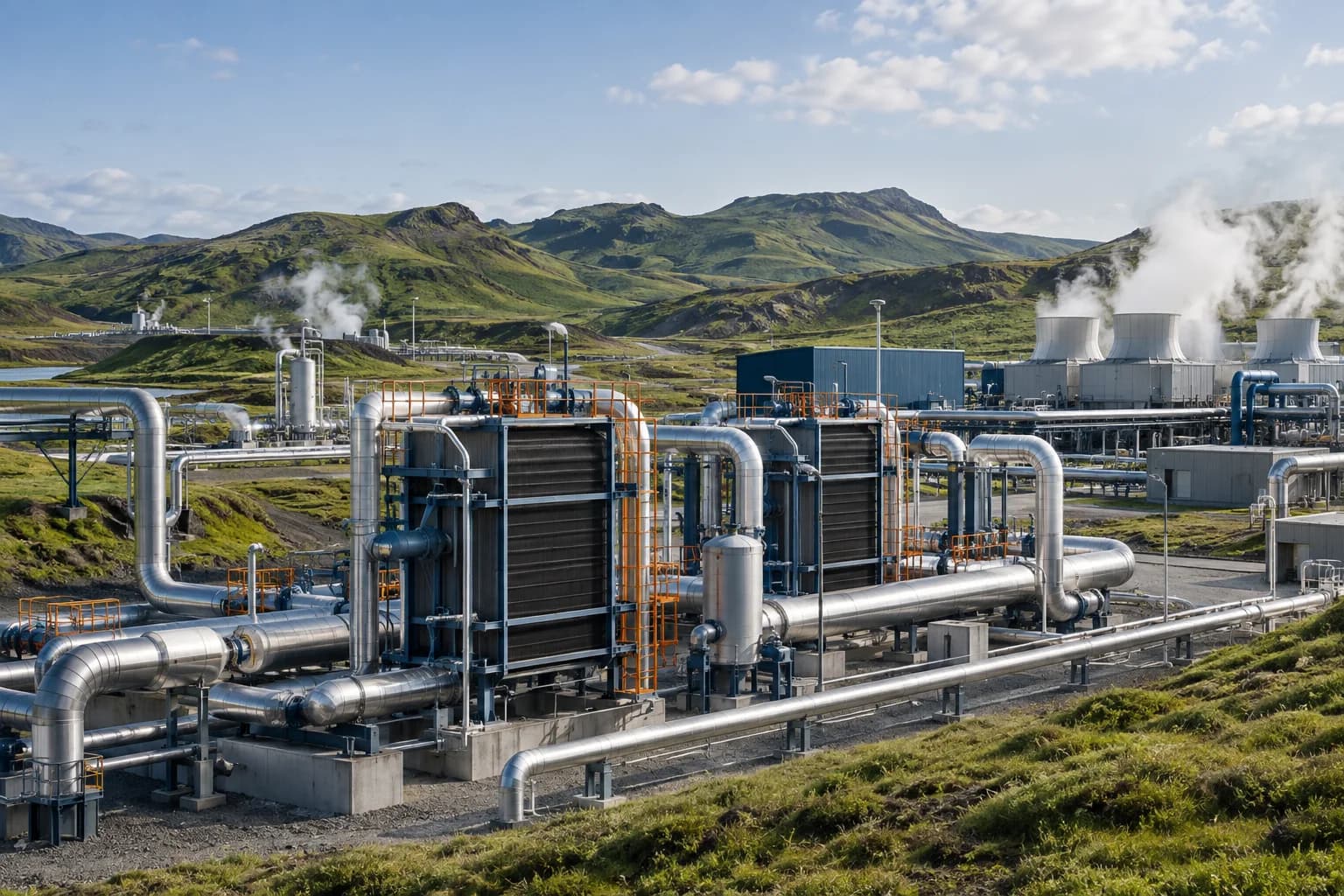
Identify whether the project uses a naturally permeable hydrothermal resource, an enhanced geothermal system or a closed-loop arrangement. These describe different ways of accessing underground heat and do not imply one interchangeable equipment package. State the resource information available to the purchasing team and the approved well and surface design. Keep subsurface development services distinct from wellhead, pumping and heat-transfer equipment. An enquiry for surface goods should identify its connection points and duty without implying that it includes reservoir development or a prediction of sustainable output.
Provide the relevant fluid chemistry, temperature, pressure, flow duty and project assessment of scaling or corrosion conditions. Define the separation between resource fluids and any secondary circuit in the approved surface arrangement. Identify pumps, heat exchangers, valves, instruments and auxiliaries within the supply boundary, together with electrical and control interfaces. Request a documented suitability assessment for the proposed configuration and the applicable material requirements. Familiar equipment from an oil-and-gas application should not be assumed suitable for a different geothermal environment solely because its nominal size or general function appears comparable.
How can acceptance evidence be made useful to the project team?
Prepare an equipment and document schedule tied to the package identifiers and approved specification revisions. Define the required drawings, material records, inspection stages, test reports and final configuration information. Where a standardized procurement specification is adopted, include its associated quality, information and project-data requirements. Identify the purchaser's review and witness points and any hold points that affect shipment. A statement that equipment is certified leaves unanswered which certificate applies, which configuration was examined and what evidence will accompany the actual delivery.
Separate manufacturing acceptance from installation, integration and demonstration of the overall project objective. Define any separately contracted site support and its prerequisites, deliverables and acceptance authority. For monitoring systems, preserve configuration, calibration and data-handling records relevant to the stated programme. For process packages, keep the test conditions and outstanding limitations visible in the handover dossier. Record proposed deviations before acceptance rather than treating silence as approval. The evidence should let the receiving team trace the delivered equipment to its reviewed scope and identify what still requires project-level verification.
What makes commercial offers comparable without overstating the benefit?
Compare offers against a common equipment, documentation and service boundary. Separate base goods, optional integration work, spares, consumables, technical attendance and recurring measurement services. Record the delivery rule and named place, manufacturing lead-time starting event and assumptions about approvals or missing design inputs. Distinguish dispatch estimates from site readiness. Identify the manufacturing country for each supplied item rather than substitute the seller's address or shipment origin. An apparently lower package price may omit conditioning equipment, utilities or reporting activities included in another proposal.
Keep environmental or economic outcomes separate from the equipment quotation unless an agreed evidence method and contractual scope explicitly support them. Hardware supply alone does not demonstrate a quantified emissions reduction, eligibility for carbon credits or a guaranteed geothermal energy yield. Send the process basis, resource information and requirement schedule to Oillinko for manual review and coordination. Use the related requirement guides to refine individual packages. Catalogue coverage is a starting point for an enquiry; availability, technical suitability and any specialist execution scope must be established for the actual project.