
Oillinko

Offshore & Marine

Offshore production, subsea operations, marine support and harsh-environment equipment.

Explore equipment, services and software used in this sector. Choose a requirement type or category to refine the catalogue. Each product or service has its own information page with selection guidance and a request form.

Read the Offshore & Marine procurement guide

Preparing an offshore or marine equipment enquiry
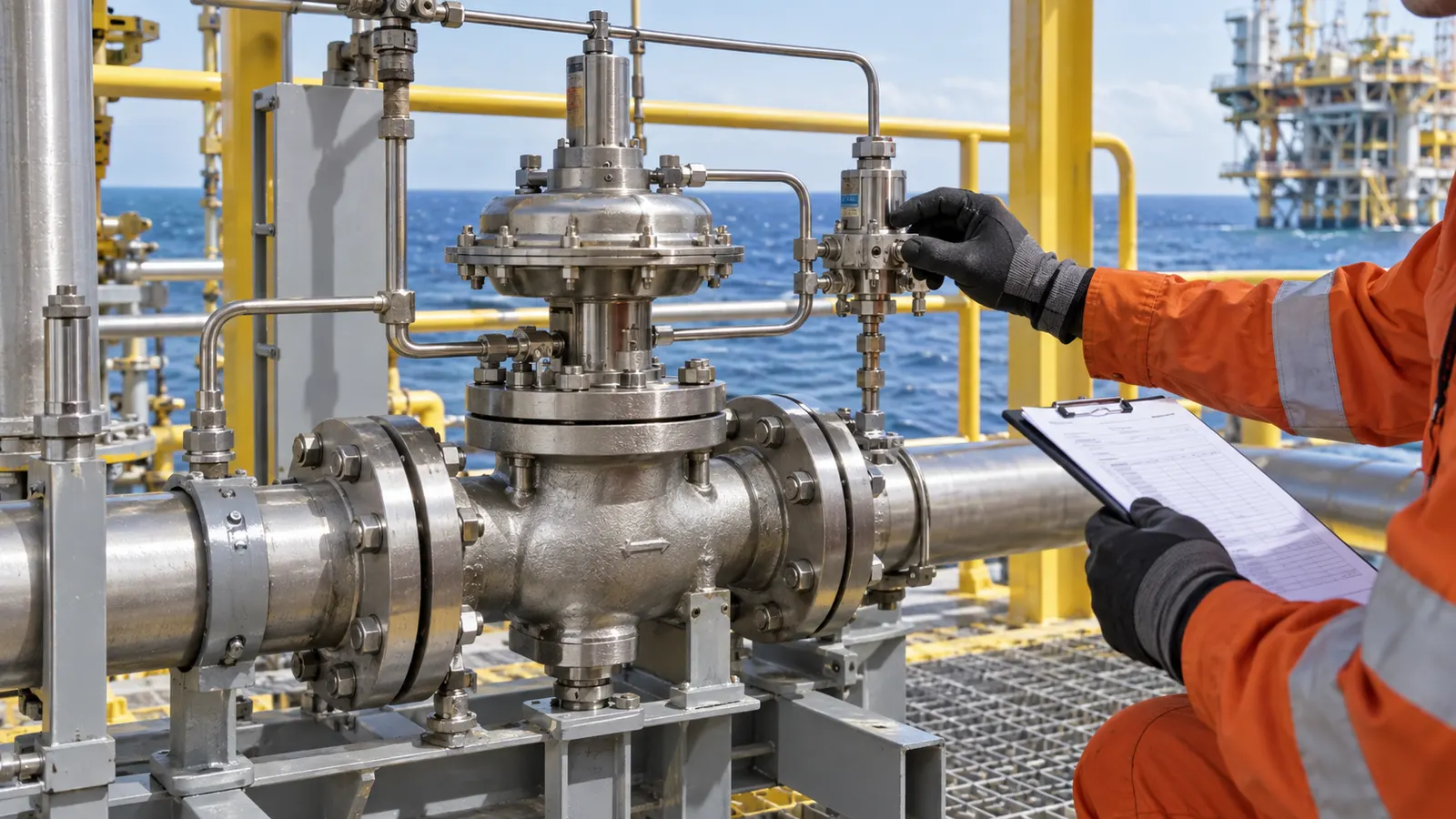
Illustration of seawater valve equipment on an offshore platform with the sea beyond
Illustrative industry scene.

Begin with the asset and the work package

Offshore and marine purchasing covers several different installations: production platforms, subsea equipment, support vessels and the shore-based facilities that serve them. Identify the asset and the system before selecting a catalogue category. A seawater utility valve, a pressure-containing production component and a vessel treatment package can all appear in a marine enquiry while having different design, inspection and approval requirements. Explain whether the work is a new installation, a replacement, maintenance or a specialist service. This gives a reviewer the context needed to interpret the technical schedule.

Break a mixed request into identifiable line items and work packages. Separate equipment supply, fabrication, inspection, installation support and commissioning when different parties perform them. Provide a controlled bill of quantities and the available drawings, with each clarification linked to an item number. Mark information that is still provisional. A complete package may be convenient commercially, but the proposal still needs to identify its boundaries and the interfaces supplied by the buyer, shipyard, operator or another contractor.

Describe seawater and external exposure separately

State which parts contact seawater or another process fluid and which parts face only the external marine environment. Give the relevant fluid analysis, operating and design conditions, and any approved material or coating requirements. Salinity, suspended matter, treatment chemicals and temperature can affect the engineering review. An item described as marine grade is not a complete material specification. Identify the specified body, trim, seals, fasteners and protective system where these are controlled by the project.

For material-sensitive duties, request a documented response to the required grades and supporting records. Distinguish a proposed alternative from a confirmed match. Corrosion protection can involve coatings, cathodic protection, material selection and monitoring, with different responsibilities for design and supply. Provide the approved basis for the relevant system. Do not infer manufacturing origin from a brand, sales office or shipping point; state any origin restriction and ask for confirmation for each offered item.

Check installation and utility interfaces

Space, maintenance access, mass and connecting geometry matter on a vessel or offshore installation. Provide the current arrangement drawings and the dimensions needed to evaluate replacement or installation. Record flange or thread references, electrical supply and control interfaces, and any classification or environmental requirements set by the responsible design. Equipment offered with an actuator or control panel should identify the included assembly and the utilities it requires. Similar nominal sizes do not establish compatibility with an existing connection or foundation.

Subsea and topside requirements should be distinguished explicitly. Water depth, access method and intervention interfaces can change the equipment or service scope, but the buyer should use the approved project basis rather than infer operating limits from a general product family. List integration, mounting and site testing as separate responsibilities. Ask how the offered package will be checked against the supplied drawings and what information must be confirmed before release for manufacture.

Connect approvals and inspection to the actual equipment

Approval evidence must relate to the particular product and installation. For example, ballast water management systems used for convention compliance require the applicable Administration's type approval under the relevant approval framework. This is a different question from whether a company supplies marine equipment. The project team should identify the vessel, flag, applicable requirements and the survey or commissioning scope. Ask for the offered configuration and its documented approval coverage, and keep installation acceptance separate from a broad catalogue statement.

For other packages, define the inspection and release records appropriate to their function. Material traceability, examination reports, pressure-test records and functional checks are different forms of evidence. Specify the required dossier, witnessing points and acceptance authority before comparing offers. If the work is a service, state the examination coverage, access arrangements and required personnel qualifications. A report should identify the examined asset and any limitations so it can support the intended engineering decision.

Plan preservation, logistics and handover

Identify the dispatch point, delivery destination and required arrival date separately. The project schedule may depend on a vessel call, yard period or offshore work window, so distinguish production lead time from transport and mobilisation. Confirm packing dimensions, mass, preservation and storage instructions. Handling or lifting provisions need the appropriate engineering and documentation; inclusion of a fabricated frame does not establish that every offshore lifting requirement is satisfied.

Compare the complete supply or service scope before the final commercial total. Identify spares, accessories, field connections, documentation, training and attendance as inclusions or exclusions. Record deviations for technical review and keep any promised delivery subject to the actual proposal. Submit the specification or whole equipment list to Oillinko when the requirement spans several categories. Our team reviews the enquiry and coordinates clarification; catalogue coverage does not establish reserved inventory, an appointed specialist or project approval.

30 of 37 categories · 184 equipment, service and software types

Have a BOQ? Send the whole list

Results for: Offshore & Marine

Gas compression and prime movers for process, transmission and utility duties. Package boundaries and operating envelopes need to be agreed before pricing.

Explore the full category →

Isolation, regulation, non-return and pressure-protection valves. Identify service conditions, end connections and actuation as a single selection.

Explore the full category →

Connection components matched by dimensional standard, material and pressure designation. Include drawings when joining unlike systems.

Explore the full category →

Line pipe, process piping and oil-country tubular goods. Distinguish nominal size from outside diameter and state the required inspection scope.

Explore the full category →

Measurement devices and accessories specified by process conditions, range, connection and signal. Brand headquarters do not establish manufacturing origin.

Explore the full category →

Control, monitoring and communication components for process operations. Compatibility with the installed system is central to replacement sourcing.

Explore the full category →

Power generation, distribution and electrical installation equipment for industrial sites. Supply voltage, frequency and hazardous-area requirements must be explicit.

Explore the full category →

Engineered static equipment and replacement parts for storage and thermal duties. Pricing requires a design basis rather than a catalogue size alone.

Explore the full category →

Integrated treatment and utility packages with clearly defined battery limits, performance requirements and site interfaces.

Explore the full category →

Rig systems and drilling equipment selected against the well programme, installed rig and service conditions.

Explore the full category →

Surface well equipment and flow-control components requiring defined pressure, temperature, material and interface specifications.

Explore the full category →

Downhole completion and production-support requirements, including equipment used to access and maintain existing wells.

Explore the full category →

Survey and subsurface evaluation requirements. State whether the inquiry concerns equipment, software licensing or a specialist service scope.

Explore the full category →

Specialist equipment for marine environments, subsea interfaces and offshore support. Drawings, operating depth and qualification records are essential inputs.

Explore the full category →

Fire protection and personal/site safety equipment selected to the project hazard assessment and required approvals.

Explore the full category →

Treatment and monitoring equipment based on feed-water analysis, discharge targets and plant utility conditions.

Explore the full category →

Workshop, site and shutdown equipment with load, compatibility and certification requirements captured before quotation.

Explore the full category →

Submit a scoped service inquiry to Oillinko. We review the location, deliverables and required qualifications before identifying suitable service providers.

Explore the full category →

Equipment for low-temperature gas storage, transfer and regasification. Confirm fluid, minimum design temperature and the system design basis before comparing offers.

Explore the full category →

Transfer and measurement systems for liquid and gas terminals. State the loading arrangement, measurement purpose and shutdown interfaces as separate parts of the request.

Explore the full category →

Fluid-power packages and components for machinery, actuators and utility systems. Replacement compatibility depends on the circuit, fluid and operating envelope.

Explore the full category →

Thermal and building-service systems supporting process plants and industrial facilities. Site climate, utility conditions and operating duty define the enquiry.

Explore the full category →

Tools and components for engineered well-retirement programmes. The operator's barrier design and specialist execution scope determine the equipment enquiry.

Explore the full category →

Specialist well-service enquiries reviewed by Oillinko against your programme, location and required personnel qualifications. Equipment supply and field execution should be stated separately.

Explore the full category →

Enquiries for preparing, testing or maintaining pipeline and process systems. Each scope needs defined system boundaries, acceptance criteria and site responsibilities.

Explore the full category →

Defined maintenance work packages for operating facilities and shutdowns. Include the work window, asset condition and interfaces with site operations when requesting support.

Explore the full category →

Inspection and assessment enquiries with a defined method, coverage and deliverable. Qualification or accreditation requirements are checked for the particular assignment.

Explore the full category →

Drawing-based fabrication and site-work enquiries with explicit design, installation and inspection responsibilities. Scope and local execution capability are reviewed per project.

Explore the full category →

Specialist enquiries for asset retirement, environmental assessment and site recovery. Define waste ownership, required deliverables and the applicable project approvals in the scope.

Explore the full category →

Design, software and engineering-support enquiries with named deliverables and agreed responsibility boundaries. Existing data, software ownership and integration requirements shape the scope.

Explore the full category →