
Preparing exploration equipment and subsurface data handover enquiries
State the subsurface question and the purchase boundary
An exploration enquiry should begin with the question the project needs to investigate and the evidence already available. Identify the survey area, wells or sample programme concerned, and the stage at which the proposed purchase will be used. Distinguish equipment supply or rental from field acquisition, processing and interpretation services. An acquisition system records measurements; a processing assignment and an interpretation study have separate inputs and outputs. Requesting all three under a broad exploration heading can produce quotations that answer different parts of the project while appearing commercially comparable.
Define the expected handover between the field team, laboratory, data processor and subsurface reviewer. List existing equipment and datasets that must be used, together with their known limitations. State which design decisions remain with the project and which specialist proposals are requested. For an early enquiry with an incomplete programme, ask for a defined feasibility or scope review separately from a firm equipment schedule. Do not ask a vendor to infer survey coverage, measurement objectives or a complete evaluation programme solely from the proposed budget or geographic region.
Describe the acquisition system and its field interfaces
For seismic or other geophysical equipment, identify the proposed method, land or marine setting, sensor arrangement and recording requirements established by the survey design. Provide the existing system configuration when requesting components, including connection drawings and data interfaces. Ask which sensors, acquisition units, synchronization equipment, cables, power arrangements and handling accessories are included. Channel count or a recording-unit name cannot establish a complete compatible system. Any capability stated in the offer should be related to the specific configuration and the conditions supplied for review.
For a field service, separate survey design, mobilization, acquisition and processing responsibilities. Identify access constraints and the project approvals required before site work, without treating a preliminary enquiry as permission to begin operations. Request the proposed quality-control records, equipment identification and treatment of interrupted or incomplete coverage. Name the deliverables needed during acquisition and at final handover. The responsible survey team should select the measurement programme and operating procedures; the buyer's role is to make scope, assumptions and acceptance evidence clear enough to review and price consistently.
Preserve location, depth and sample identity
Subsurface information loses value when its references are unclear. Specify the coordinate reference system, units, survey identifiers and any relevant vertical reference for the proposed data handover. For well records, identify the depth reference and how measurements are associated with the well and run. Request documentation of conversions rather than assume that values with similar labels share a common basis. A plotted image can look plausible even when its underlying position or depth is misunderstood, so reviewers need the reference information alongside the measurement files.
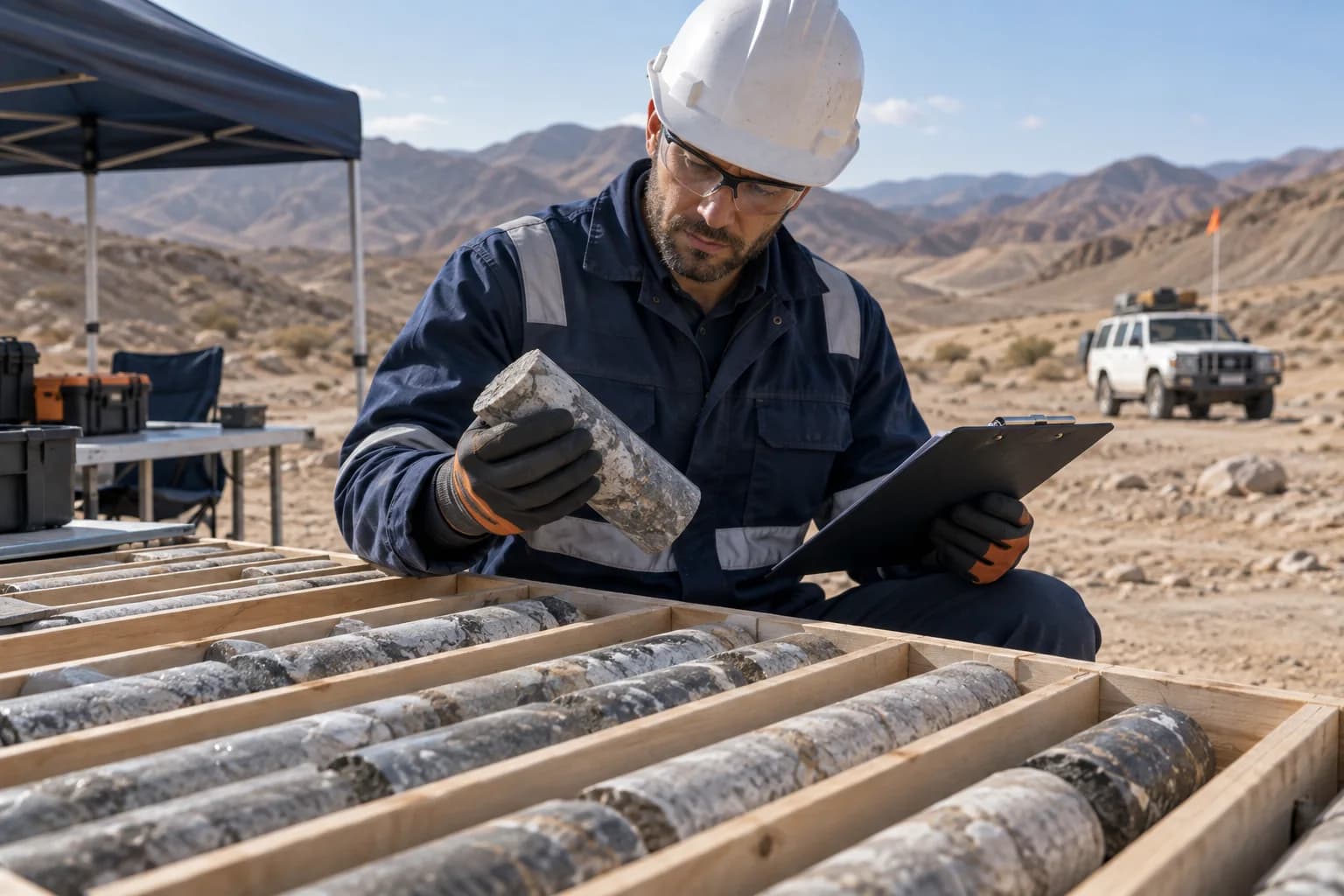
For core or fluid sampling equipment, describe the sample type, intended analysis and preservation requirements determined by the programme. Identify the containers, labels, handling records and accessories included in the purchase. For a sampling service, agree how each sample will be associated with its location, interval and collection record, and how custody will be recorded during transfer. Keep the sampling scope separate from the laboratory analysis. Do not infer representativeness, preservation success or suitability for every test from the fact that a sample was collected or a container supplied.
Make data delivery testable before the final handover
List required raw measurements, processed datasets, quality-control records, navigation information and interpretation outputs as separate deliverables. Identify file formats and revisions, units, header conventions and metadata that the receiving team needs. When seismic data are requested in SEG-Y, specify the agreed revision and the header information required for import, rather than naming the format alone. The standard provides structures for trace and coordinate information, but the contract still needs an agreed delivery convention and documented use of relevant fields for the actual dataset.
Request a representative sample delivery for the receiving team to test before the complete dataset is transferred. Check that files can be opened, references understood and expected identifiers reconciled with the delivery inventory. Define how corrupt, missing or inconsistent files will be reported and corrected, and who approves the final package. Keep processing history and the stated limitations with the delivered results. Importing a file successfully is one acceptance step; it does not establish that acquisition coverage is complete or that an interpretation has removed subsurface uncertainty.
Compare equipment, services and data rights on their own terms
An equipment quotation should distinguish purchased hardware, rental periods, accessories, software dependencies, maintenance and training. A service quotation should identify personnel scope, deliverable stages, review cycles and excluded processing or interpretation work. State the permissions needed to use existing datasets and the required rights to retain, share and reprocess new deliverables. Data ownership and software licensing are different questions, and neither should be assumed from possession of a file. Request clarification where a proprietary project format would prevent the planned handover to another discipline or application.
Confirm manufacturing country for supplied equipment separately from the location of survey personnel, analysis or dispatch. Compare the schedule for equipment delivery with the time required for field access, sample transfer, processing and review. Submit the objectives, available records and delivery checklist to Oillinko for manual review and enquiry coordination. Mark missing inputs as open items rather than conceal them behind a broad package description. A useful offer identifies what can be supplied or assessed on the stated basis, while leaving geological conclusions, field approvals and unverified compatibility for the responsible project review.